 Bellingham Siding
 Siding Replacement for Ferndale Homes
Ferndale sits close enough to the water and open farmland north of Bellingham that its homes take a different kind of weather beating than houses tucked into town. Wind off the Strait and the Nooksack delta carries salt and moisture further inland here than most homeowners expect, and it does it year-round. If your siding is cupping, staining, or has gone soft at the bottom courses, it's usually not one storm that did it — it's years of Whatcom County's marine climate working on a product that wasn't built to shed it.
We replace siding in Ferndale with James Hardie fiber cement exclusively. That's not a marketing line — it's a standard we hold because we've seen what wood-based and vinyl products do to homes in this exact climate, and we'd rather turn down a job than install something we know will disappoint a homeowner in five years.
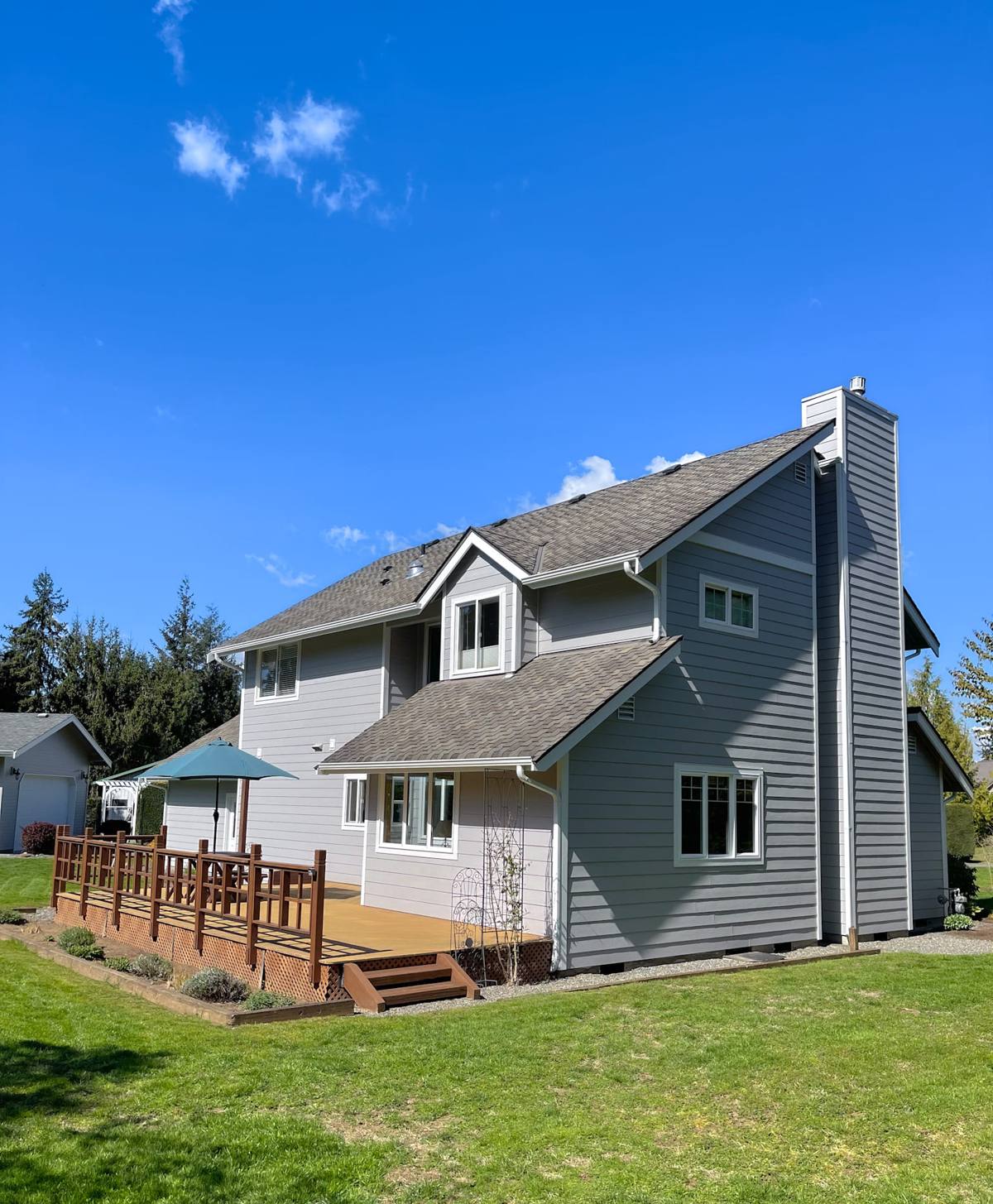
Why Ferndale's Climate Is Harder on Siding Than It Looks
Ferndale doesn't get the dramatic weather that makes headlines. What it gets instead is relentless, low-grade exposure that adds up:
- Salt air: Proximity to Bellingham Bay and the Strait of Georgia means airborne salt settles on siding, trim, and fasteners. Over time it accelerates corrosion on unprotected metal and works into porous or poorly sealed siding materials.
- Driving rain: Whatcom County's rain rarely falls straight down. Wind-driven rain pushes water sideways into laps, seams, and butt joints — the exact spots where lesser siding systems fail first.
- Long moss season: Cool, damp conditions persist for much of the year, giving moss and algae a long runway to establish on north-facing walls, under eaves, and anywhere siding stays shaded and wet.
- Freeze-thaw cycling: Whatcom County gets enough winter cold snaps that any siding holding moisture will see that moisture freeze, expand, and stress joints and fasteners.
None of these are extreme on their own. Together, over a decade or two, they're exactly the conditions that separate siding products that hold up from siding products that don't.
What Correct Siding Replacement Actually Involves
Siding replacement isn't just pulling off old panels and nailing up new ones. Done right, it's a system — and skipping steps is where most premature failures start, regardless of what siding material sits on top.
Tear-off and inspection
We remove the old siding down to the sheathing and actually look at what's underneath. This is often the first time in decades anyone has seen the wall assembly on a Ferndale home. Soft sheathing, rot around window openings, or compromised framing gets identified and addressed before anything new goes up — covering a problem with new siding doesn't fix it.
Weather-resistive barrier and flashing
A correctly lapped weather-resistive barrier, properly integrated window and door flashing, and attention to every penetration (vents, hose bibs, light fixtures) is what actually keeps wind-driven rain out of the wall — not the siding material itself. This is the part of the job that's invisible once finished, and it's the part that matters most.
Installing to manufacturer spec
James Hardie siding has specific fastening patterns, clearances, and gapping requirements. Nail placement, minimum clearance from grade, deck surfaces, and roof lines, and proper caulking at butt joints all affect how the siding performs over time. Installed loosely to "make it work," even the best product on the market will underperform.
Ferndale Siding Job Checklist
- Full tear-off and sheathing inspection, not an install-over-existing shortcut
- Repair or replace any soft, rotted, or water-damaged sheathing before re-siding
- New weather-resistive barrier, properly lapped shingle-style
- Flashing integrated at every window, door, and penetration
- James Hardie panels or lap siding fastened to manufacturer spec
- Proper clearance maintained from grade, decks, and roofing
- Factory-finished ColorPlus caulk and touch-up used at cut ends and seams
- Walk-through with the homeowner before final sign-off
Why We Install Only James Hardie
We get asked why we don't offer vinyl, LP SmartSide, or cedar as options. The honest answer is that we've standardized on one product because it's the one we trust to perform in this climate without the homeowner needing to babysit it.
| Concern in Whatcom County | How James Hardie Addresses It |
|---|---|
| Moisture and driving rain | Fiber cement doesn't absorb and swell the way wood-based products can; installed correctly, it manages moisture well over decades |
| Moss and algae exposure | ColorPlus factory finish resists the fading and surface breakdown that gives moss and algae an easier foothold |
| Salt air corrosion | Fiber cement itself doesn't corrode; using compatible, corrosion-resistant fasteners protects the rest of the system |
| Long-term appearance | Factory-applied finish holds color and texture better over time than field-applied paint or stain systems |
| Fire exposure | Non-combustible core material, a real consideration given dry summer stretches and rural proximity to vegetation |
That's not to say every product we don't install is a bad product everywhere. Vinyl is inexpensive and easy to install. Cedar has genuine curb appeal and a long tradition in this region. LP SmartSide has its market. But each comes with a trade-off — vinyl's seams and heat sensitivity, cedar's maintenance demands and moisture vulnerability, engineered wood's sensitivity to correct installation and ongoing sealing — that we don't think holds up well against Ferndale's specific combination of salt, rain, and moss over a 20-30 year horizon. James Hardie's HZ5 product line is engineered for exactly this kind of Pacific Northwest exposure, and its warranty reflects that confidence.
Our Process for Ferndale Projects
1. On-site assessment
We walk the property, look at the current siding's failure points, check the condition of trim and flashing, and talk through what you're seeing from the inside — drafts, moisture, stains — that might point to what's happening behind the walls.
2. Written scope and estimate
You get a clear scope of work and pricing before anything starts. No surprise change orders for work that should have been identified up front.
3. Tear-off and repair
Old siding comes off, sheathing gets inspected and repaired as needed, and any rot or moisture damage is addressed and documented.
4. Weather barrier and Hardie installation
New barrier, flashing, and James Hardie siding go on to manufacturer spec, with attention to the details that determine whether it lasts 10 years or 40.
5. Final walk-through
We walk the finished job with you, address anything you flag, and make sure you understand the color and finish warranty coverage on your new siding.
Cost Factors for a Ferndale Siding Job
Every home is different, but a few things consistently move the price on a siding replacement in this area:
| Factor | Why It Matters |
|---|---|
| Extent of sheathing/rot repair | Homes with long-deferred maintenance or prior moisture intrusion often need more substrate work before siding goes on |
| Home size and wall complexity | Dormers, multiple gables, and cut-up wall lines take more labor and material than simple rectangular walls |
| Siding profile chosen | Lap siding, panel siding, and shingle-style Hardie products differ in material and labor cost |
| Trim and accessory scope | Replacing trim, fascia, and soffits alongside siding adds cost but avoids mismatched new-siding-old-trim results |
| Site access | Fencing, landscaping, and tight lot lines common on some Ferndale properties can affect staging and labor time |
Why Hire a Crew That Already Works This Area
A contractor who works Ferndale and greater Whatcom County regularly already knows what to expect before the tear-off starts — how far salt exposure typically travels inland from the bay, which wall orientations tend to hold moss longest, and how local building department expectations run on flashing and moisture barriers. That's the difference between a crew solving problems they've seen before and one learning on your house.
It also matters for accountability. A local crew is still around next year if a warranty question comes up, and has a reputation in the area worth protecting — which shapes how carefully the job gets done in the first place.
Signs You Need Siding Replacement, Not Just Repair
- Soft or spongy spots when you press on the siding, especially near the bottom courses
- Persistent moss or algae staining that returns quickly after cleaning
- Visible cupping, warping, or separation at seams
- Paint that won't hold or keeps peeling in the same spots
- Rising energy bills alongside drafts near exterior walls
- Siding original to a home built more than 20-25 years ago with wood-based or older vinyl products
If you're seeing one or two of these, a targeted repair might be enough. If you're seeing several, or if the underlying sheathing has already been compromised, full replacement is usually the more cost-effective path over the long run.
If your Ferndale home's siding is showing its age, we're happy to take a look and give you a straightforward, no-pressure assessment. Request a free estimate using the form below and we'll walk you through exactly what we see and what it would take to fix it right.