 Bellingham Siding
 Siding Installation in Lynden: A Job That Has to Answer to the Weather
Lynden sits far enough north in Whatcom County to catch a specific mix of exterior stresses: salt-tinged marine air rolling in off the Sound, long stretches of driving rain through fall and winter, and a moss and mildew season that can linger most of the year on shaded walls. A siding installation here isn't just a cosmetic upgrade — it's the primary barrier standing between that climate and the framing, sheathing, and insulation behind it. Get it right and a home stays dry and low-maintenance for decades. Get it wrong, or install a product that isn't suited to this exposure, and problems start showing up in years, not decades.
We install one siding system: James Hardie fiber cement. This page focuses specifically on what a siding installation project looks like for a Lynden home — what the climate demands, what a correct install actually involves, and how our process works from first estimate to final walk-through.
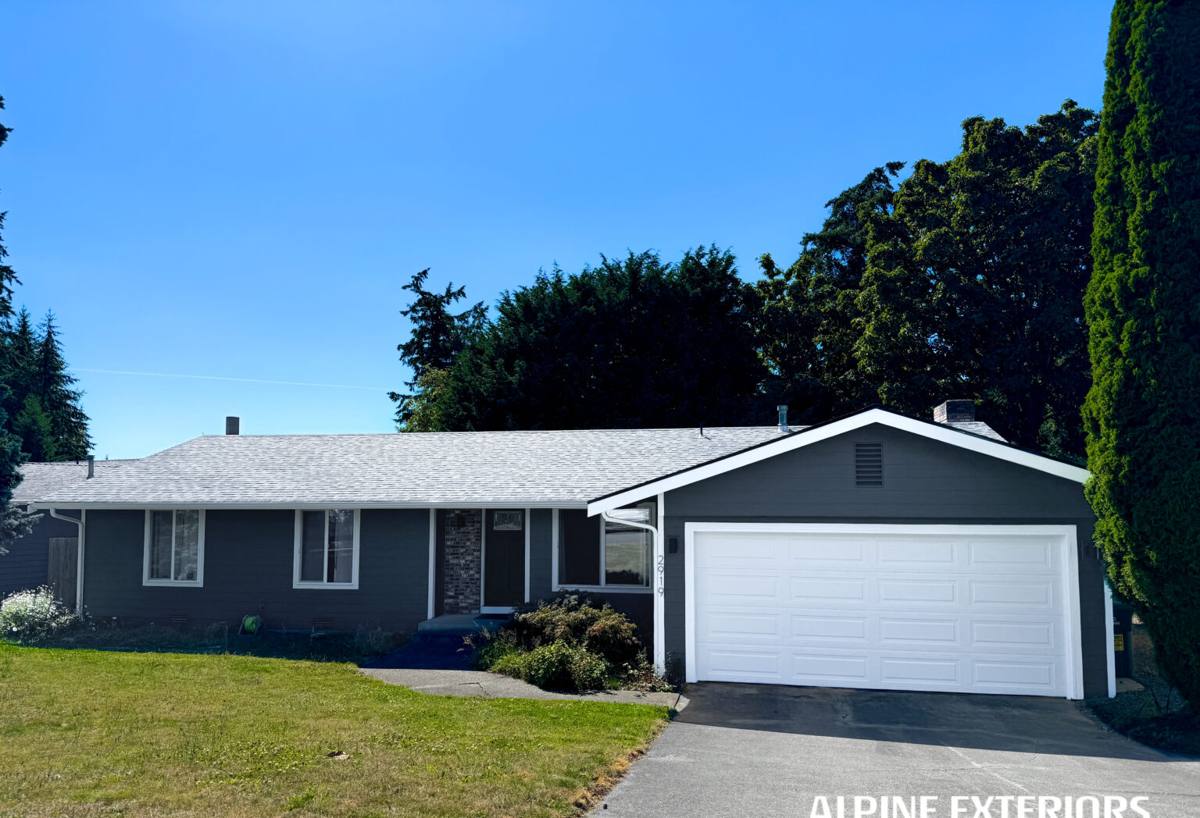
What Lynden's Climate Demands From Siding
Salt Air and Corrosion
Even homes that sit inland from the immediate shoreline pick up a steady dose of salt-laden air moving through this part of Whatcom County. Salt accelerates corrosion in fasteners, flashing, and trim, and it can shorten the useful life of lower-grade finishes. A siding installation done right accounts for that from the start — corrosion-resistant fasteners, properly detailed flashing, and a finish that isn't going to chalk or fade prematurely under that exposure.
Driving Rain That Doesn't Fall Straight Down
Rain in this region is frequently wind-driven, which pushes moisture sideways into seams, laps, and penetrations rather than just down onto the top of the wall. That's a harder load to manage than a simple rainfall total suggests, and it's exactly where poor installation detailing shows up first — around window and door trim, at inside and outside corners, and anywhere two pieces of siding meet. A siding product and installation method that only handles straight-down rain isn't enough for a Lynden wall.
A Long Moss and Mildew Season
Mild temperatures, shaded lots, and consistent moisture add up to a moss and mildew season that runs long here, especially on north-facing walls that don't get much direct sun. Siding that's even slightly porous, or that holds moisture against the substrate, becomes a growth surface over time. That's a durability issue as much as an appearance one — sustained moisture against wood-based sheathing is how rot starts.
Why We Install James Hardie and Nothing Else
We used to install a wider range of siding products. We stopped, and that decision came from what we saw repeatedly on service calls and tear-offs in this specific climate, not from a supplier relationship.
- Non-combustible core: Fiber cement doesn't feed a fire the way wood-based siding products can, which matters for safety and can matter for insurance.
- Factory-applied ColorPlus finish: The color and topcoat are cured under controlled factory conditions rather than brushed on in the field, which holds up longer against fading, chalking, and moisture than site-applied paint.
- Climate-engineered HZ product lines: Hardie's HZ5 formulation is built for regions with significant moisture exposure and freeze-thaw cycling, which fits northern Whatcom County well.
- Dimensional stability: Fiber cement doesn't swell, cup, or warp the way engineered wood products can after repeated moisture cycling over a wet season.
- Strong transferable warranty: Hardie backs the product with a robust warranty, provided the installation follows their published specifications.
We don't install LP SmartSide, vinyl siding, Cemplank, Allura, primed spruce, or cedar. Each has a place in the market and homeowners who are satisfied with them. Our call is a professional one: in a climate that puts this much sustained moisture and salt exposure on a wall, we'd rather stand fully behind one system than offer a cheaper option that quietly shifts maintenance risk onto the homeowner.
What a Correct Siding Installation Actually Involves
Tear-Off and Substrate Inspection
Before any new siding goes up, the old material comes off and the sheathing underneath gets inspected. This is the step that gets skipped or rushed on lower-bid jobs, and it's the one that matters most. Hidden rot, soft sheathing, or moisture damage behind old siding has to be found and repaired before a new weather-resistive barrier and siding go on — covering over a problem doesn't make it go away, it just hides it for another cycle.
Weather-Resistive Barrier and Flashing
A correctly installed weather-resistive barrier, with properly lapped flashing at every window, door, and penetration, is what actually keeps wind-driven rain out of the wall assembly. The siding itself is the visible layer, but the barrier and flashing behind it are doing the real waterproofing work. Skipping or shortcutting this step is one of the most common ways a siding job fails early in a climate like this one.
Fastening and Clearances
James Hardie publishes specific fastening patterns, nail types, and clearance requirements — including minimum clearance from grade, roof lines, and other transitions — and following them isn't optional if the warranty is going to hold. Corrosion-resistant fasteners matter here specifically because of the salt content in the air.
Trim, Caulking, and Finish Details
Corners, trim boards, and seams are where water intrusion typically starts if they're not detailed correctly. Factory-primed or ColorPlus-finished trim, installed with the right gaps and sealant at the right joints, is part of what separates a siding job that looks good on day one from one that still looks good after ten wet winters.
Our Process, Start to Finish
- Walk-through and estimate: We look at the home in person — wall orientation, existing siding condition, trim complexity, and any visible moisture or rot signs — before quoting a number.
- Scope and product selection: We confirm the Hardie product line, profile, and color, and lay out the scope in writing, including how substrate repair will be handled if it's found during tear-off.
- Tear-off and inspection: Old siding comes off, sheathing gets inspected, and any necessary repairs are addressed before moving forward.
- Barrier, flashing, and installation: Weather-resistive barrier, flashing, and new siding go on to Hardie's published spec, with attention to fastening, clearances, and joint detailing.
- Final walk-through: We go over the finished work with the homeowner before calling the job complete.
Cost Factors for a Lynden Siding Installation
| Factor | Why It Matters | Climate-Specific Consideration |
|---|---|---|
| Home size and wall area | Drives material and labor volume | More wall area exposed to wind-driven rain and salt air |
| Tear-off vs. new construction | Tear-off adds disposal and substrate inspection time | Substrate repair likelihood rises with older siding in a wet climate |
| Trim and detail complexity | More corners, windows, and transitions mean more flashing work | Each transition is a potential entry point for driving rain |
| Substrate condition | Hidden rot or moisture damage must be repaired before siding goes on | More likely on north-facing or long-shaded walls in a long moss season |
| Siding profile and color | Lap, shingle, and panel profiles carry different material costs | Darker ColorPlus finishes and HZ5 formulation suited to this exposure |
Exact numbers depend on the specific home, which is why we walk the property before giving a real estimate rather than quoting off a generic price list.
Signs Your Lynden Home Needs a Siding Installation
- Soft or spongy siding, especially low on the wall or around window and door trim
- Moss or dark staining that returns quickly after cleaning, particularly on north-facing walls
- Peeling, chalking, or bubbling paint on older wood-based siding
- Visible warping, cupping, or gaps at siding seams and corners
- Rising energy bills that suggest the wall assembly is no longer doing its job
- Old siding that's simply reached the end of its practical service life
Why Hiring a Crew That Already Works Lynden Matters
A crew that installs siding across Whatcom County regularly sees how salt air, wind-driven rain, and a long moss season actually play out on real houses over a full year, not just how a product performs on a spec sheet. That shapes practical decisions on install day: where to spend extra time on flashing, which wall orientations need the most attention, and which corners genuinely can't be cut in this climate. Lynden's mix of open farmland and tree-sheltered lots means moisture and shade exposure vary more from property to property than in some neighboring towns, so we evaluate each home individually rather than applying a one-size-fits-all approach to every job.
Get a Free, No-Pressure Estimate
If your Lynden home needs new siding, or you're not sure whether what you have is still doing its job, we're glad to take a look and give you a straightforward, honest assessment. Fill out the form below to schedule a free estimate — no pressure, no upsell script.