 Bellingham Siding
 Roofing in Happy Valley: A Different Set of Conditions
Happy Valley sits close enough to Bellingham Bay and the surrounding wooded terrain that its roofs take on a specific combination of stress most inland neighborhoods don't deal with. Salt-tinged air off the water accelerates corrosion on exposed metal fasteners and flashing. Driving rain, pushed sideways by wind off the water, finds gaps that a straight-down rainstorm never would. And the mature tree canopy that gives the neighborhood its character also means shade, damp debris, and a moss season that runs longer here than it does on more open, sun-exposed lots elsewhere in Whatcom County.
None of that means Happy Valley roofs need to be exotic or overbuilt. It means the installation details — the ones nobody sees once the roof is finished — have to be done correctly for the specific conditions of this neighborhood, not just to a generic code minimum.
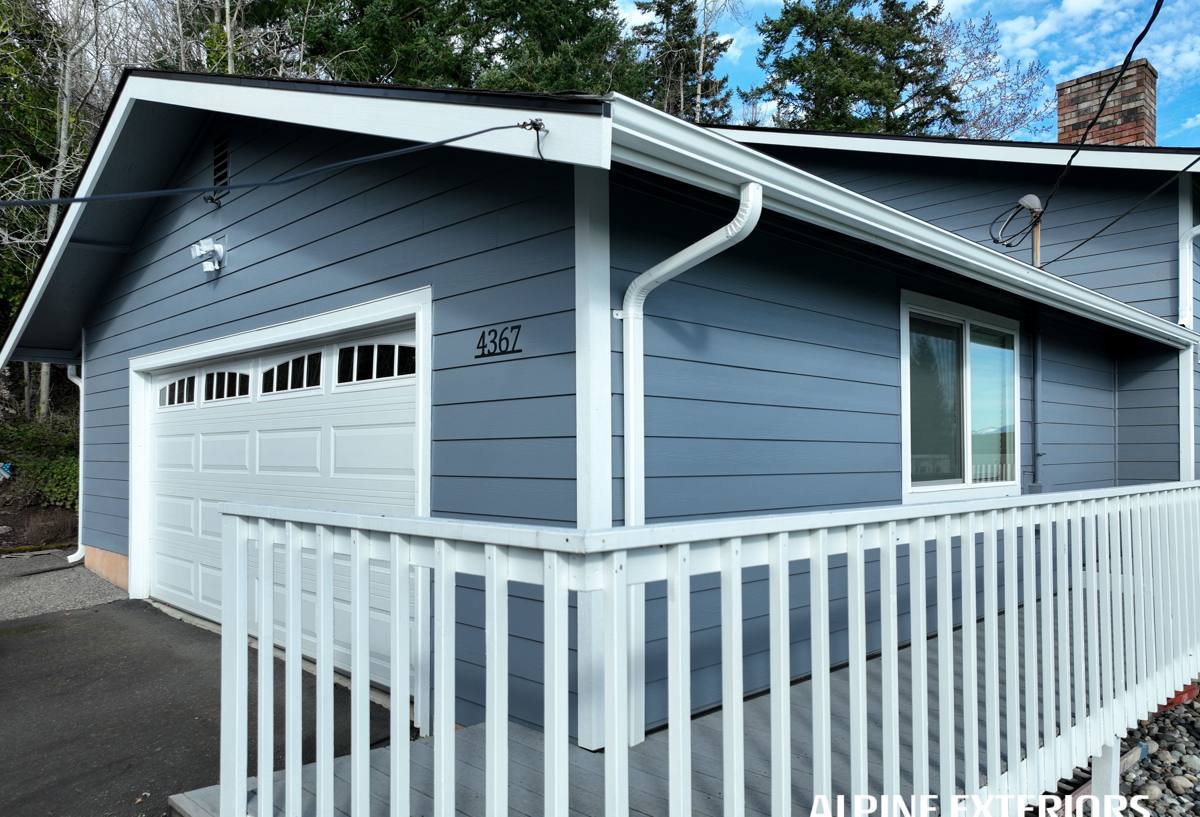
What Actually Wears Out a Happy Valley Roof
Moss and Organic Growth
Shaded, north-facing slopes and roof valleys that stay damp longer after a storm are where moss gets a foothold first. Moss isn't just cosmetic — it holds moisture against the roofing material, lifts shingle edges as it grows, and over years can work its way under flashing. A roof that dries out quickly after rain will always outlast one that doesn't, regardless of the material on top.
Wind-Driven Rain
Bellingham's storms often come with a horizontal component, not just vertical rainfall. That means underlayment, flashing details, and fastening patterns matter more here than they would in a drier or more sheltered climate. A roof that would perform fine in a low-wind region can still leak in Happy Valley if the underlayment and flashing weren't installed with wind-driven rain in mind.
Salt Air and Corrosion
Being close to the water means airborne salt content is higher than it is further inland. Bare steel fasteners, lower-grade flashing, and unprotected metal edges corrode faster here. It's a slow process, but over ten or fifteen years it's often the reason a roof that "should" have more life left starts leaking at the edges and penetrations first.
What a Correct Installation Involves
A new roof is really a system, not a single product. The shingles or panels get the attention, but most leaks trace back to the layers underneath and the details around penetrations. For Happy Valley homes, we treat the following as non-negotiable, not upgrades:
- Full tear-off to the deck on reroofs — never installing new material over old, which traps moisture and hides deck damage
- Deck inspection and repair or replacement of any soft, delaminated, or water-stained sheathing before anything new goes down
- Ice-and-water shield or equivalent self-adhered membrane at eaves, valleys, and around all penetrations — the areas most exposed to wind-driven rain and moss-related moisture
- Synthetic underlayment across the full field, rated for the wind exposure of the site
- Balanced intake and exhaust ventilation, sized to the actual attic volume, not a generic ridge vent afterthought
- Corrosion-resistant flashing and fasteners at all valleys, chimneys, skylights, and wall intersections
- Drip edge at eaves and rakes, properly lapped with the underlayment rather than tucked underneath it
Skip any one of these and the roof may still look correct from the ground for a few years. The failures show up later, usually in the exact spots — valleys, penetrations, shaded slopes — where Happy Valley's climate is hardest on a roof.
Material Options for This Neighborhood
There's no single "right" material for Happy Valley — the right choice depends on your home's slope, shade exposure, budget, and how long you plan to own the property. Here's how the common options actually compare under local conditions:
| Material | Moss Resistance | Wind-Driven Rain Performance | Typical Lifespan Here |
|---|---|---|---|
| Architectural asphalt shingle | Moderate — depends on slope and shade; algae-resistant granules help | Good, with correct underlayment and fastening | 20–30 years |
| Standing seam metal | Strong — sheds moisture quickly, little surface for moss to grip | Excellent when flashed correctly | 40–50+ years |
| Composite/synthetic shake | Good, varies by product | Good | 30–50 years, product-dependent |
| Cedar shake | Weak in shaded, damp areas without regular maintenance | Fair; more installation-sensitive | 20–30 years with upkeep |
We don't push one material on every job. A shaded, moss-prone slope on a modest budget often does better with a well-ventilated architectural shingle roof and a maintenance plan than with a premium material installed without attention to drainage and airflow. On the other hand, homes with heavier tree cover or owners planning to stay long-term often find metal's upfront cost pays off in reduced maintenance and moss resistance.
A Word on Cedar Shake
Cedar has real appeal and a long history in this region, but it's also the most maintenance-sensitive option in a shaded, damp neighborhood like Happy Valley. It needs regular cleaning and treatment to resist moss and rot in low-sun areas. We'll still install it if that's what a homeowner wants, but we're upfront that it asks more of the owner over time than asphalt or metal does — that's a maintenance trade-off, not a knock on the product.
Ventilation and Moisture Management
Attic ventilation gets overlooked constantly, and it's one of the biggest factors in how long a roof lasts here. Without balanced intake (usually soffit vents) and exhaust (ridge or box vents), heat and moisture build up under the deck. In a climate like Bellingham's, that trapped moisture condenses, softens the sheathing from underneath, and shortens the life of the roofing material regardless of how good it is. It also creates the humid, still conditions moss and algae prefer.
We calculate ventilation based on actual attic square footage and existing intake, not a rule of thumb pulled off a shingle wrapper. On homes with additions, dormers, or cathedral ceilings, this often takes more thought than a straightforward gable roof.
Our Installation Process
- On-site assessment — we walk the roof and attic, check the deck, ventilation, flashing points, and any existing moss or moisture damage before quoting anything.
- Written scope and estimate — materials, underlayment, ventilation plan, and flashing details spelled out, not just a per-square price.
- Tear-off and deck repair — full removal of old roofing, replacement of any damaged sheathing found underneath.
- Underlayment and flashing — self-adhered membrane at vulnerable areas, synthetic underlayment across the field, new flashing at every penetration.
- Roofing material installation — installed to manufacturer specification and local wind exposure, not just "to code minimum."
- Ventilation and cleanup — intake/exhaust balance checked, site cleared of debris and nails, magnetic sweep of the yard.
- Final walk-through — we go over the finished roof with the homeowner before calling the job done.
What Drives Cost on a Happy Valley Roof
| Factor | Why It Matters Here |
|---|---|
| Roof pitch and access | Steeper roofs and limited driveway/yard access affect labor and staging time |
| Deck condition | Shaded, moss-affected roofs more often have hidden sheathing damage found at tear-off |
| Material choice | Asphalt, metal, and composite carry different material and labor costs |
| Number of valleys and penetrations | Chimneys, skylights, and complex rooflines all add flashing labor |
| Ventilation upgrades | Homes with inadequate existing ventilation may need added soffit or exhaust venting |
| Tree cover | Heavy overhanging branches sometimes require trimming or extra protection during the job |
Because of these variables, we don't quote a full roof replacement without seeing the roof and attic in person. Anyone offering a firm price over the phone for a job like this is guessing.
Why Local Installation Experience Matters
A crew that mostly works drier, more inland parts of Whatcom County can still install a technically correct roof — but they may not default to the underlayment coverage, flashing detail, or ventilation sizing that Happy Valley's shade and salt-air exposure actually call for. Those aren't upgrades we upsell; they're the baseline we start from because we see what happens to roofs here over ten and twenty years, not just what passes inspection on install day.
We also know which slopes in this kind of neighborhood tend to hold moss longest and which flashing points take the most abuse from wind-driven rain, so we're not learning that on your roof for the first time.
Timeline and What to Expect
Most single-family roof replacements in this area take one to three days on-site once materials are staged, weather permitting. Bellingham's wet season narrows the installation window, so we plan around forecasts rather than pushing a job in marginal weather — a roof installed in the wrong conditions is more likely to have long-term problems than one that starts a few days later. We'll give you a realistic schedule up front, including how we handle a weather delay if one comes up mid-project.
Get a Straight Answer About Your Roof
If your roof is showing moss buildup, aging shingles, or signs of wear from Happy Valley's damp, salty air, we're glad to take a look and give you an honest read on what it needs — whether that's a full replacement or just targeted repair. Reach out for a free, no-pressure estimate using the form below.