 Bellingham Siding
 Fairhaven's Coastal Climate Puts Real Demands on a Roof
Fairhaven sits close enough to Bellingham Bay that salt-laden air is part of daily life, and it shows up in how fast a roof ages. Add in the wind-driven rain that blows off the water during fall and winter storms, plus a moss season that can stretch for most of the year under the shade of mature trees, and you have a combination that's tough on standard roofing. Asphalt shingles in this environment tend to lose granules faster than the manufacturer's brochure suggests, moss works its way under tab edges and holds moisture against the deck, and algae staining sets in on north-facing slopes that never fully dry out.
Metal roofing was built for exactly this kind of exposure. It doesn't have an organic surface for moss to root into, it sheds wind-driven rain instead of absorbing it, and with the right coating system it shrugs off salt air for decades instead of years. That said, "metal roofing" covers a wide range of products and installation quality, and in a place like Whatcom County, the details of how it's installed matter as much as the material itself.
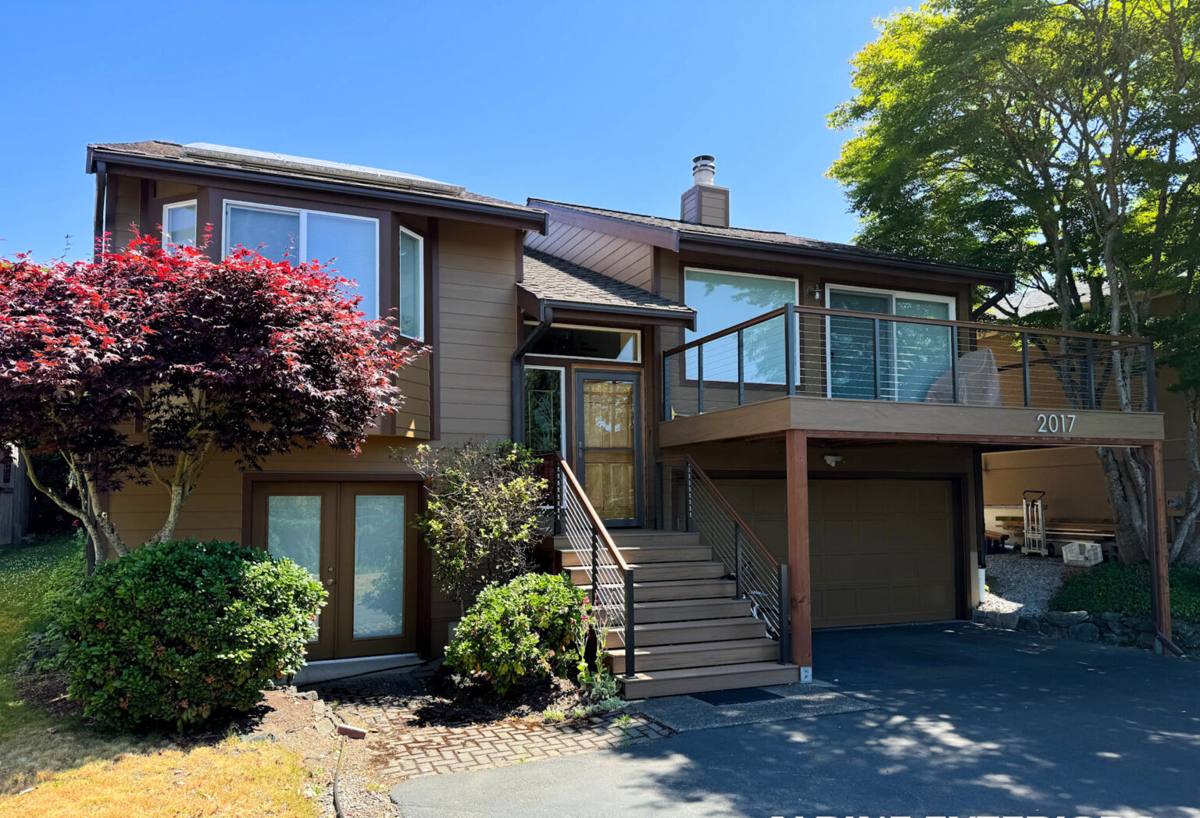
What a Correctly Installed Metal Roof Involves
A metal roof is only as good as the assembly underneath it. We've seen plenty of metal roofs fail early not because the panels were bad, but because the underlayment, fastening, or flashing was an afterthought.
Underlayment and Moisture Barrier
Metal panels are not the moisture barrier — the underlayment is. In a climate with this much sustained rain, we use a high-temperature synthetic or self-adhered underlayment rated for metal roofing, with extra layers or ice-and-water-style membrane at valleys, eaves, and any low-slope transitions where water sits longer.
Fastening and Panel Seams
How a panel is attached determines how it moves. Metal expands and contracts with temperature swings, and fasteners or clips need to allow for that movement without creating stress points that eventually work loose or wallow out the decking underneath.
Flashing at Valleys, Walls, and Penetrations
Most metal roof leaks don't happen in the field of the panel — they happen at transitions: valleys, sidewalls, chimneys, vent pipes, and skylights. These need custom-formed flashing and proper layering with the underlayment, not just a bead of sealant covering a gap.
Ventilation
Older Fairhaven homes often have attic or roof assemblies that weren't built with today's ventilation standards in mind. A metal roof installed over an under-ventilated deck can trap moisture, so we check intake and exhaust airflow as part of the job, not as a separate line item nobody asked about.
Choosing a Metal Roofing System for a Fairhaven Home
There's no single "best" metal roof — the right choice depends on the roofline, the budget, and how long you plan to own the home. Here's how the common options compare for this area:
| Panel Type | Fastening | Typical Lifespan | Best Fit |
|---|---|---|---|
| Standing seam | Concealed clips, no exposed screws | 40–60+ years | Homes closer to the water, low-slope sections, anyone who wants the fewest future maintenance points |
| Exposed-fastener (corrugated/rib panel) | Screws driven through the panel face | 25–40 years | Budget-conscious projects, garages and outbuildings, simpler rooflines |
| Stone-coated steel | Concealed fastener under a coated granule surface | 30–50 years | Homeowners who want a shingle or tile look with metal's durability underneath |
Exposed-fastener panels cost less up front, but every screw is a potential leak point once the rubber washers age, and in a climate this wet, that maintenance adds up. Standing seam has no exposed fasteners at all, which is why we lean toward it for Fairhaven roofs that see direct exposure to salt air and driving rain — the lower long-term maintenance burden usually outweighs the higher install cost over the life of the roof.
Moss and Bellingham's Long Wet Season
Moss doesn't attack metal the way it attacks asphalt. It needs an organic, textured surface to root into and hold moisture against, and a smooth metal panel simply doesn't give it that foothold. That's one of the biggest practical advantages of switching to metal on a shaded, damp Fairhaven lot — you stop fighting the moss-and-shingle-lifting cycle entirely.
That doesn't mean zero maintenance. Debris still collects in valleys, against ridge caps, and around chimneys and vent penetrations, and that debris holds moisture even on a metal roof. We recommend an annual check to clear needles and leaf litter, especially on homes tucked under overhanging trees, and keeping gutters clear so water isn't backing up under the drip edge. It's a much lighter maintenance load than an asphalt roof needs in the same conditions, but it isn't nothing.
Salt Air and Corrosion Control
Proximity to the water means any exposed metal — panels, fasteners, flashing — needs a coating system rated for coastal exposure, not just general-purpose galvanized steel. We spec Galvalume or aluminum-zinc coated steel with a baked-on PVDF or comparable paint finish, which holds up to salt air significantly longer than bare galvanized or a basic polyester coating.
Fastener choice matters just as much as the panel. We use fasteners matched to the panel material and rated for coastal environments, and we avoid putting dissimilar metals in direct contact with each other — for example, raw aluminum against copper flashing — because that combination accelerates corrosion through galvanic reaction. It's a detail that's easy to overlook and expensive to fix once it's under a finished roof.
Our Process, Start to Finish
- On-site assessment — we look at the existing roof, decking condition, ventilation, and how exposed the home is to wind and salt air before recommending anything.
- Deck evaluation — older Fairhaven homes sometimes have board sheathing instead of plywood or OSB, which changes how panels are fastened and whether any deck repair is needed first.
- System selection — we walk through panel type, coating, and color based on your roofline, budget, and how long you plan to stay in the home.
- Permitting — we handle the paperwork with the local building department so the job is inspected and documented properly.
- Tear-off and installation — old roofing removed, deck repaired as needed, underlayment and flashing installed correctly, then panels set and seamed.
- Cleanup and walk-through — magnetic sweep for stray fasteners, site cleared, and a final walk-through so you know what maintenance, if any, to expect going forward.
Why Hiring a Crew That Already Works in Fairhaven Matters
A lot of what makes a metal roof perform in this neighborhood isn't in the product spec sheet — it's local knowledge. Crews who already work Fairhaven roofs know which homes are likely to have older board sheathing under the shingles, how much wind exposure a given lot gets off the water, and where moss tends to build up fastest based on tree cover and slope orientation. That translates into fewer surprises mid-project and a roof detailed for the conditions it will actually face.
There's also a practical side to being local: faster response if a warranty question comes up, familiarity with the permitting process in Whatcom County, and a crew that isn't working from a generalized regional playbook but from what's actually held up — and what hasn't — on roofs a few miles from yours.
Signs Your Current Roof Is Ready for a Metal Upgrade
Not every roof needs replacing yet, but a few signs point toward planning ahead rather than waiting for a leak:
- Granule loss or bald patches on asphalt shingles, especially on slopes facing the prevailing wind and rain
- Moss established on ridges or in valleys that keeps coming back after cleaning
- Curling, cupping, or lifted shingle edges
- Daylight visible through the roof deck from inside the attic
- Stains on interior ceilings after heavy wind-driven rain
- Rising heating costs that may point to a roof assembly that's no longer sealing or insulating well
If you're seeing two or more of these, it's worth getting a straightforward assessment before a small problem turns into a deck repair project.
What This Costs, Honestly
Metal roofing costs more upfront than asphalt shingles, and the range depends heavily on panel type, roof complexity, and how much deck repair is needed. As a rough guide, standing seam systems typically run higher than exposed-fastener panels, which in turn cost more than a basic asphalt replacement — but the tradeoff is a roof that's likely to outlast two or three asphalt replacements over the same span of years, with far less moss and maintenance work in between. We give exact numbers only after seeing the roof in person, since roofline complexity and deck condition change the estimate more than the panel choice does.
If you're weighing metal roofing for a Fairhaven home, we're happy to take a look and give you a straightforward, no-pressure estimate — use the form below to get started.