 Bellingham Siding
 Why Blaine Roofs Wear Differently Than Roofs Inland
Blaine sits right where the Salish Sea meets the Canadian border, and that location shapes everything about how a roof ages here. Homes a few miles inland in Whatcom County deal with plenty of rain, but Blaine roofs also take on salt air off the water, wind-driven rain that comes in sideways during winter storms, and a moss season that can run eight months or longer under the region's tree cover and marine cloud layer. A roof built for a drier climate, or even for typical Bellingham conditions a few miles south, doesn't always hold up the same way this close to the water.
Salt Air and Metal Components
Salt in the air accelerates corrosion on anything metal — flashing, fasteners, vent caps, and gutter hardware. On a lot of older Blaine roofs we open up, the shingles themselves still have some life left, but the flashing and nails have corroded to the point where leaks start at the seams rather than through the field of the roof. Material choice and fastener grade matter more here than they would twenty miles inland.
Wind-Driven Rain Off the Strait
Storms coming off the Strait of Georgia don't just drop rain straight down — they push it sideways and drive it up under shingle edges, around chimneys, and into valleys. A roof that would perform fine in a calmer climate can leak in Blaine if the underlayment and flashing details weren't built with wind-driven rain in mind from the start.
A Long, Shaded Moss Season
Between the marine layer, the tree cover common on Blaine lots, and north-facing slopes that rarely see direct sun, moss and algae get a long runway to establish themselves. Moss doesn't just look bad — it holds moisture against the roofing material, works its way under shingle tabs, and shortens the life of whatever's underneath it if it isn't controlled.
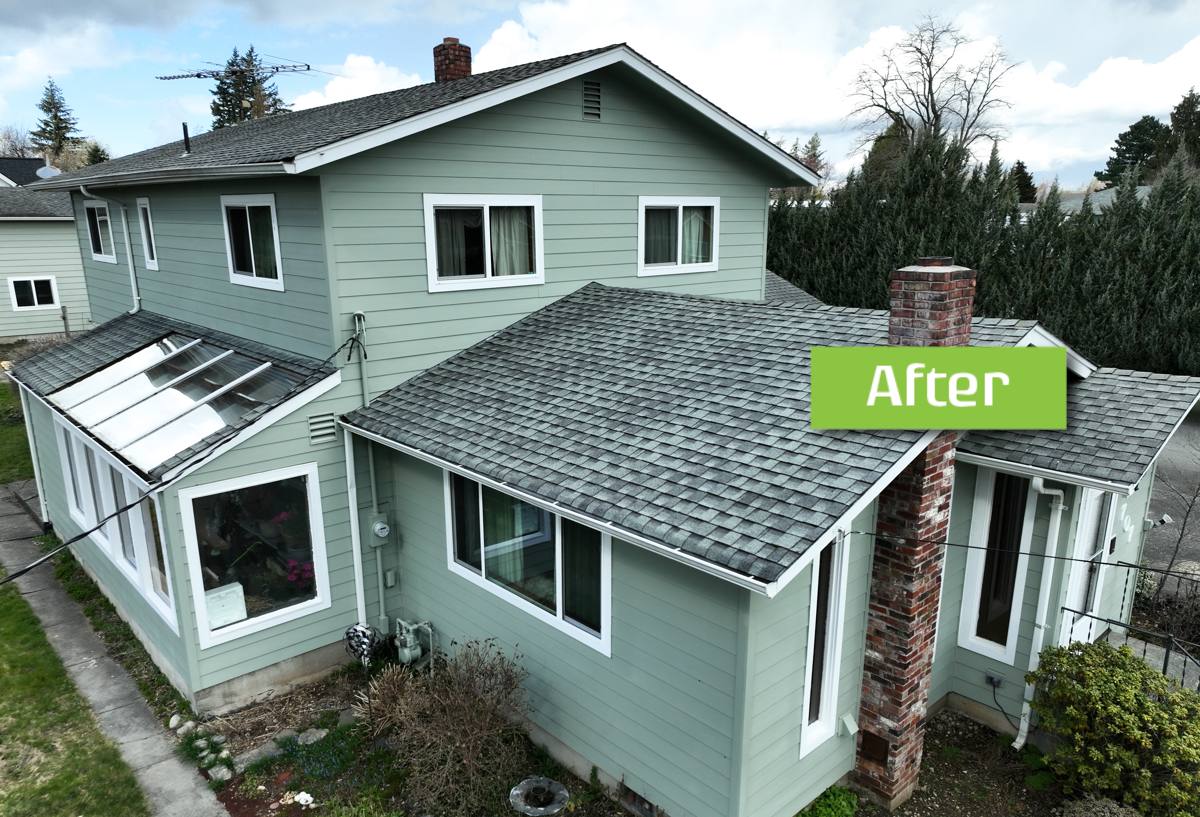
Signs a Blaine Home Needs a New Roof, Not Just a Repair
Not every roof problem calls for full replacement, and an honest contractor should tell you that. But there are signs that patching is just delaying an inevitable full tear-off:
- Granule loss heavy enough that you can see bare asphalt in multiple spots, not just one worn patch
- Moss or algae established across large sections rather than isolated shady corners
- Soft spots or sagging in the decking when walked on, which usually means water has already gotten into the wood
- Multiple past repairs in different areas, suggesting the roofing system as a whole is at the end of its service life
- Daylight visible through the attic decking, or consistent moisture staining on interior ceilings
- A roof original to a home built more than two to three decades ago, especially one that's never had ventilation upgraded
What a Correct New Roof Installation Actually Involves
A new roof is more than shingles nailed to plywood. In a coastal, high-moisture climate like Blaine's, the layers underneath the visible roofing do most of the work protecting the home.
Tear-Off and Deck Inspection
We remove the old roofing down to the deck rather than layering over it. That's the only way to actually inspect the plywood or OSB underneath for rot, delamination, or soft spots — problems that are common on homes that have carried moss or trapped moisture for years without anyone checking underneath.
Ice-and-Water Membrane and Underlayment
Eaves, valleys, and areas around chimneys and skylights get a self-adhering waterproof membrane before anything else goes down. This is the backup layer that keeps wind-driven rain from becoming an interior leak if it ever gets past the shingles. The rest of the deck gets a synthetic underlayment that sheds water and holds up better over time than older felt products, especially in a climate this damp.
Flashing Details That Matter Most Here
Given the salt air and driving rain, we pay particular attention to step flashing at walls and chimneys, valley flashing, and pipe boots — these are the spots where the vast majority of Blaine roof leaks actually originate. We use flashing and fasteners rated for corrosion resistance rather than the cheapest option, since replacing corroded flashing under intact shingles a few years down the road costs far more than doing it right the first time.
Ventilation
Balanced intake and exhaust ventilation keeps the attic close to outdoor temperature and lets moisture escape instead of condensing on the underside of the deck. This matters everywhere, but in a climate with Blaine's humidity and moss pressure, poor ventilation is one of the most common reasons a roof fails from the inside out well before its shingles wear out.
Choosing a Roofing Material for Blaine's Climate
There's no single "best" roofing material for every home — the right choice depends on your roof's exposure, your home's style, and how much long-term maintenance you want to take on. Here's how the common options compare specifically against Blaine's salt air, rain, and moss conditions:
| Material | Moss/Algae Resistance | Wind & Rain Performance | Maintenance | Typical Lifespan |
|---|---|---|---|---|
| Architectural asphalt shingle | Good with algae-resistant granules; still needs periodic cleaning | Strong when properly nailed and flashed; rated for high wind when installed to spec | Low to moderate — occasional moss treatment | Long-term, varies by product line and installation quality |
| Standing seam metal | Excellent — moss struggles to grip smooth metal panels | Excellent shedding of wind-driven rain; sheds moss and debris | Low — mainly gutter and fastener checks | Very long-term with proper coating and fasteners |
| Synthetic/composite shingle | Good, product-dependent | Strong wind ratings on most product lines | Low to moderate | Long-term, varies by manufacturer |
Metal costs more upfront than asphalt shingles but sheds moss and handles driving rain about as well as any material available, which is why we see more of it going on waterfront and heavily shaded Blaine lots. Architectural shingles remain the most common choice for good reason — modern algae-resistant products close a lot of the gap, and they cost less to install and repair. We'll walk you through the honest trade-offs for your specific roof rather than pushing one product line.
Our Installation Process, Start to Finish
- On-site inspection and estimate — we get on the roof (not just a look from the ground), check the deck where accessible, and give you a written scope and price before any work starts.
- Material selection — we go over the options in the table above based on your roof's exposure, your budget, and how the home looks from the street.
- Permitting — new roof installations in Whatcom County typically require a permit; we handle that paperwork so you don't have to track it down yourself.
- Tear-off day — old roofing comes off, the deck gets inspected and any damaged sections replaced, and the roof is dried in with underlayment the same day whenever weather allows, so your home isn't left exposed overnight.
- Installation — flashing, shingles or panels, ridge caps, and vents go on to manufacturer spec and local code.
- Cleanup and magnetic sweep — old material and debris are hauled off, and we sweep the property for stray nails.
- Final walkthrough — we go over the finished roof with you before calling the job done.
Why a Crew That Already Works in Blaine Matters
Roofing crews who mostly work drier, inland areas sometimes underbuild for what Blaine actually throws at a roof — lighter underlayment, standard rather than corrosion-resistant fasteners, or ventilation specs that work fine in Bellingham's more sheltered neighborhoods but fall short right on the water. A crew that regularly works Blaine and the rest of Whatcom County's coastline knows which details to upgrade without upselling you on things you don't need.
There's also the practical side: familiarity with Whatcom County's permitting process, realistic scheduling around the wetter months when tear-offs need tighter weather windows, and knowing which flashing and fastener grades actually hold up on homes exposed to the Strait rather than guessing. That local track record shows up in fewer callbacks, not in anything you'd notice on a glossy brochure.
Keeping Your New Roof Performing After Installation
A correctly installed roof still benefits from some upkeep in this climate:
- Keep gutters and valleys clear of needles and debris so water has a clean path off the roof
- Have moss treated before it establishes a thick mat, rather than waiting until it's visible from the street
- Trim back overhanging branches where practical to reduce shade and debris buildup
- Have the roof looked at after major windstorms, especially ones with a strong marine push
- Watch for granule buildup in gutters, which can signal a shingle roof nearing the end of its life
What to Look for in a New Roof Installation Quote
Whoever you hire, a solid quote for a new roof in Blaine should spell out these items clearly rather than lumping everything into one vague number:
- Full tear-off to the deck, not an overlay, with deck repair priced separately if damage is found
- Ice-and-water membrane at eaves, valleys, and roof penetrations specified by name
- Underlayment type called out, not just "underlayment included"
- Flashing material and fastener grade specified, especially for a coastal property
- Ventilation plan — intake and exhaust, not just a ridge vent added as an afterthought
- Manufacturer and product line named for shingles or panels, with warranty terms explained
- Cleanup and nail sweep included, along with disposal of old materials
- Permit handling clarified — who pulls it and who's responsible for inspection scheduling
If you're weighing a repair against a full replacement, or you just want an honest read on what your Blaine roof needs before another wet winter, we're happy to take a look. Fill out the form below for a free, no-pressure estimate.