 Bellingham Siding
 Silver Beach's Climate Puts Real Demands on Exterior Siding
Silver Beach sits in the kind of Whatcom County setting that looks easy on a siding job and isn't. Many homes here sit under mature tree cover close to Lake Whatcom, inside the same marine air mass that moves through Bellingham off the Salish Sea — the mix of salt-tinged humidity, driving rain, and long stretches of low winter sun that shapes how siding ages across this part of Washington. Add the shade that established trees throw across a lot of Silver Beach properties, and you get siding that stays damp longer after every storm than it would on an open, sunnier lot on the other side of town.
That combination — moisture that lingers, marine air that never fully dries out a wall, and a moss season that can run from October through April — is hard on some siding materials and barely noticeable on others. It's a big part of why the products we recommend, and the way we detail a job, aren't identical everywhere in Whatcom County. A shaded, lake-adjacent neighborhood like Silver Beach earns its own approach.
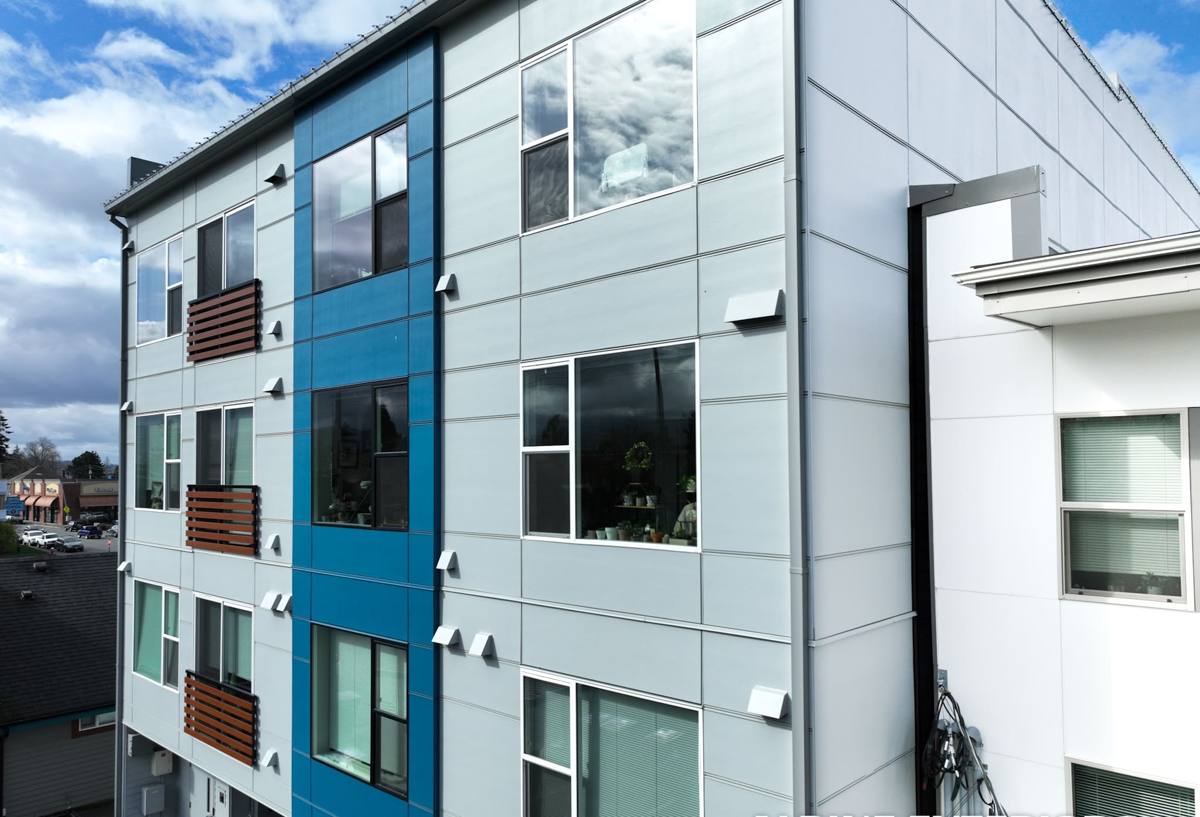
What "Correct" Fiber Cement Installation Actually Involves
Fiber cement siding fails less often because the board itself is bad and far more often because of what's underneath it or how it was fastened. On a Silver Beach home, three details matter more than most homeowners realize when they're comparing quotes.
Moisture management behind the siding
A weather-resistive barrier, lapped and taped correctly at every seam, has to go on before a single board goes up. Around windows, doors, and any wall penetration, flashing needs to shed water outward and downward — never trap it against the sheathing. On walls that sit in shade most of the day, a rainscreen gap (a thin drainage channel between the siding and the wall) gives any moisture that does get in somewhere to go instead of sitting against the back of the board.
Fastening, clearances, and caulk
James Hardie's installation requirements spell out fastener spacing, minimum clearances from grade, roof lines, and decks, and exactly where caulk belongs and where it doesn't. Skipping these isn't cosmetic — it's how water finds its way behind the board and how a finish fails years ahead of schedule. It's also how a manufacturer warranty gets quietly voided, with the homeowner not finding out until there's a problem to fix.
Trim and joint detailing built for a wet climate
Butt joints, corner boards, and the seam where siding meets trim are where water intrusion usually starts. In a neighborhood with as much rainfall and shade as Silver Beach, that means back-priming cut edges, using manufacturer-approved joint flashing, and keeping exposed end grain to a minimum on every elevation, not just the ones facing the street.
Why We Only Install James Hardie Fiber Cement
We don't install LP SmartSide, vinyl siding, Cemplank, Allura, or bare cedar and primed spruce — not because those products have no place in the market, but because after years of installing and repairing siding across Whatcom County, James Hardie is the one line where we can stand behind both the material and the warranty at the same time.
Hardie fiber cement is non-combustible, doesn't swell or hold rot the way wood-based products can once they take on moisture, and carries a factory-applied ColorPlus finish that's baked on rather than field-painted. That matters in a climate where a job-site paint coat gets far more rain exposure in its first year here than the same coat would somewhere drier.
Climate-engineered for this region
Hardie's HZ5 formulation is engineered for climates like ours — freeze-thaw swings, sustained dampness, and the kind of shaded, moss-friendly conditions common around Silver Beach and Lake Whatcom. That's a real difference from a generic fiber cement mix, and it's part of why we don't substitute a cheaper board on a wet, tree-covered lot.
Product lines we typically use in this neighborhood
- HardiePlank lap siding — the most common fit for Silver Beach's mix of older and newer single-family homes, available in smooth and cedar-textured finishes.
- HardiePanel vertical siding — used on accent gables, shed dormers, and more contemporary additions.
- HardieTrim — factory-finished trim boards that don't demand the same repaint cycle as wood trim, which matters most at the roofline and ground-contact joints that take the worst of Bellingham's rain.
Signs a Silver Beach Home May Need New Siding
Because so many lots here hold moisture longer, siding problems can develop behind the surface before they're visible from the street. Worth checking for:
- Soft or spongy spots when you press on the siding, especially near the bottom courses or below windows
- Peeling or bubbling paint that keeps coming back in the same spots year after year
- Persistent green or black staining that pressure washing only removes temporarily
- Visible warping, buckling, or gaps at seams and corner boards
- Musty smells or interior wall staining on the side of the house that gets the least sun
Any one of these can be a minor fix. Several together, especially on a shaded wall, usually mean it's worth having someone open up a section and look at the sheathing before deciding what the right repair actually is.
How We Approach a Fiber Cement Job in Silver Beach
Lot sizes, tree cover, and the age of the house vary enough in Silver Beach that no two jobs look quite the same, but the process holds steady:
- On-site assessment — we look at existing siding, sheathing condition, and how much shade and drainage each elevation gets, since a lake-facing or north-facing wall often needs different detailing than the side that gets full sun.
- Tear-off and sheathing check — old siding comes off down to the sheathing so we can catch rot or water damage before it gets covered up again, not after.
- Weather barrier and flashing — installed and inspected before any siding goes up, with extra attention at windows, doors, and roof intersections.
- Hardie installation to spec — correct fastener pattern, clearances, and joint treatment, following James Hardie's published requirements so the manufacturer warranty stays valid.
- Final detailing and walkthrough — caulking, touch-up, and a walk of the finished exterior with the homeowner before we call the job done.
Cost Factors for a Silver Beach Fiber Cement Project
Every quote is specific to the house, but the factors that move the number are consistent across the neighborhood. Here's what typically drives cost up or down:
| Factor | Why It Matters in Silver Beach |
|---|---|
| Existing siding removal | Older wood or aluminum siding often needs full tear-off; hidden rot from years of shade and moisture can add sheathing repair |
| Access and lot slope | Sloped lots and mature landscaping near the lake can limit staging room and add labor time |
| Siding profile chosen | Lap siding is generally more economical than panel or shingle-style Hardie products |
| Trim and detail work | Homes with more corners, gables, and window trim require more precision cutting and flashing |
| Color and finish | Factory ColorPlus finishes cost more upfront than field-primed boards but remove a repaint cycle from the maintenance schedule |
As a rough guide, most Whatcom County homeowners see fiber cement re-siding priced by the square foot of wall area, with the final number shaped heavily by tear-off scope and trim complexity. That's why an accurate number requires an actual look at the house rather than a phone estimate.
What Ongoing Maintenance Looks Like
Part of the case for Hardie in this climate is how little upkeep it asks for afterward, but "little" isn't "none." A realistic maintenance routine for a Silver Beach home includes:
- Rinsing siding once or twice a year to knock off pollen, dirt, and the moss spores that settle out of the air in wet, shaded spots
- Checking caulking at trim joints and penetrations every year or two, since caulk wears out well before the siding itself does
- Trimming back vegetation and tree limbs that hold moisture against a wall or keep a section of siding from drying out between storms
- Keeping gutters and downspouts clear, since overflow onto siding is one of the most common causes of premature staining and trim rot here
- Touching up any impact damage promptly rather than leaving bare fiber cement exposed through a wet season
Why Hiring Local Experience Matters Here
Fiber cement siding isn't a forgiving material to learn on. A crew that installs it correctly in a dry climate can still get it wrong here, because the details that matter most — drainage planes, clearances, joint sealing — are the ones whose consequences only show up after a full wet season or two. A crew that already works Silver Beach and the surrounding Bellingham neighborhoods has already seen how these homes hold moisture, how tree cover affects drying time on different elevations, and where the older housing stock in this part of Whatcom County tends to hide sheathing issues under existing siding.
That experience shows up less in a sales pitch and more in the small decisions made on install day — where to add extra flashing, which wall needs a rainscreen gap and which doesn't, and how to sequence the tear-off so no section of wall sits exposed overnight during a stretch of driving rain.
Get a Straight Answer for Your Home
If you're weighing a siding replacement in Silver Beach, we're glad to take a look, tell you honestly what condition your current siding is in, and walk through what a correct James Hardie installation would involve for your specific house — no pressure, and no inflated number to negotiate down from. Use the form below to request a free, no-obligation estimate.