 Bellingham Siding
 South Hill's Climate Is Harder on Siding Than It Looks
South Hill sits above downtown Bellingham with open exposure toward Bellingham Bay and the mature tree canopy that gives the neighborhood its character. That combination — elevation, marine air, and heavy shade in a lot of yards — creates a set of conditions that wear out siding faster than homeowners expect. Salt-laden air off the bay works into seams and fastener heads over time. Driving rain, pushed sideways by wind off the water, gets forced into laps and joints that would stay dry in a calmer inland location. And the long Pacific Northwest moss season, which in Whatcom County can run from fall through late spring, keeps north- and shade-facing walls damp for months at a stretch.
None of this means South Hill is a bad place to own a home — it's one of Bellingham's more established neighborhoods for a reason. It does mean that siding materials and installation details that might be "good enough" in a drier climate aren't good enough here. A siding replacement in this neighborhood has to be evaluated against moisture, not just appearance.
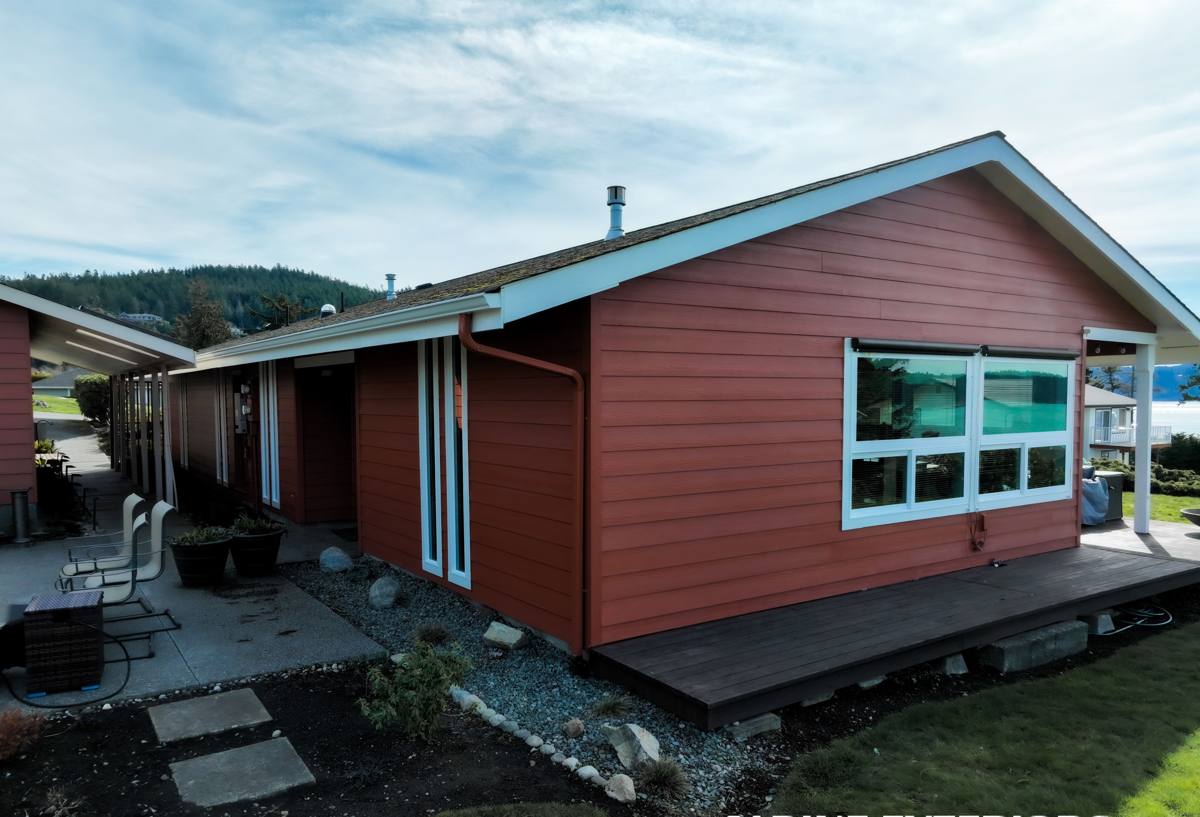
Signs a South Hill Home Needs Siding Replacement, Not Just Repair
Older siding on hillside and tree-shaded lots often fails from the inside out — the surface can look fine while the substrate underneath is already compromised. Before assuming a patch or repaint will solve the problem, look for these signs:
- Soft or spongy spots when you press on the siding, especially near the bottom courses and around window and door trim
- Paint that keeps failing in the same spots within a year or two of repainting
- Persistent black or green streaking on shaded or north-facing walls that pressure washing only knocks back temporarily
- Visible cupping, buckling, or separation at panel seams
- Gaps or caulk failure at trim joints, corners, and window flashing
- A musty smell in an adjoining interior wall or a rise in indoor humidity near exterior walls
- Siding that's original to a home built before the 1990s, which is common on this side of town
If you're seeing more than one of these at once, the underlying water-resistive barrier and sheathing may already be affected, which changes the scope of the job from a simple re-side to a tear-off that addresses what's underneath.
What a Correct Siding Replacement Actually Involves
Siding replacement done right is a system, not just a new surface. In a marine climate like Bellingham's, skipping any one layer of that system is what leads to premature failure — often hidden failure, since rot happens behind the new siding where no one sees it until it's serious.
Tear-off and inspection
Old siding and trim come off down to the sheathing so we can actually see what's there. On South Hill's older housing stock, this step regularly turns up soft sheathing, deteriorated building paper, or past repairs that were never properly flashed. You want a contractor who treats this as a genuine inspection point, not a formality on the way to installing new panels.
Water-resistive barrier and flashing
A new weather-resistive barrier goes on before any siding, with special attention to window and door openings, deck ledgers, and roof-to-wall intersections — the spots where driving rain finds its way in. Flashing has to be layered correctly, top piece over bottom, so water is shed down and out rather than trapped behind the cladding.
Fastening and clearances
Correct fastener type, spacing, and depth matter more in a wet climate than most homeowners realize — overdriven nails or the wrong fastener pattern create entry points for moisture and can void a manufacturer's warranty. Proper clearance between the bottom of the siding and grade, decks, and roof lines is also non-negotiable; too little clearance is one of the most common causes of rot we see on hillside lots where landscaping has crept up over the years.
Caulking and trim details
Every joint, corner, and penetration gets sealed with the right product for fiber cement, not general-purpose caulk that will crack and shrink within a couple of seasons.
Why We Install Only James Hardie Fiber Cement
We don't install vinyl, LP SmartSide, or other fiber cement brands. On a hillside with tree cover, wind-driven rain, and a moss season that lasts half the year, we've standardized on James Hardie because it holds up to exactly those conditions with the least long-term maintenance burden. It's non-combustible, it doesn't rot the way wood-based products can when moisture gets past a seam, and Hardie's HZ5 product line is engineered specifically for climates with sustained damp and freeze-thaw cycling — which describes South Hill's exposure well. The factory-applied ColorPlus finish also holds color and resists the mildew staining that repainted siding tends to show first on shaded walls, which matters on lots with heavy tree cover. It's backed by a strong transferable warranty, which carries real value if you sell the home down the road. We'd rather install one product correctly, every time, than juggle multiple systems and installation standards.
Our Siding Replacement Process
- On-site assessment — we walk the exterior, check problem areas you've flagged, and look at moisture-prone spots like ground clearance, deck ledgers, and shaded walls
- Written scope and estimate — a clear breakdown of what's being torn off, what we expect to find underneath, and what's included, with no vague allowances
- Tear-off and sheathing inspection — old material removed, substrate inspected, and any rot or damage documented and discussed with you before we cover it back up
- Repair as needed — damaged sheathing or framing replaced before any new barrier or siding goes on
- Water-resistive barrier and flashing installation — installed to manufacturer spec at every penetration and transition
- James Hardie siding installation — installed to Hardie's fastening, clearance, and joint specifications, which is what keeps the product warranty intact
- Trim, caulking, and final detailing — corners, trim boards, and penetrations sealed and finished
- Walkthrough — we go over the finished job with you before calling it complete
Cost Factors for South Hill Siding Replacement
Every home is different, but the variables that move the price on a South Hill project tend to be the same ones, over and over. This table covers the main factors without pretending to give you a fixed number — that only comes from an actual look at your home.
| Factor | Why It Matters Here |
|---|---|
| Extent of hidden rot | Older, tree-shaded homes on this side of town often need more sheathing repair than the exterior suggests |
| Home access and site slope | Hillside lots can mean staging and scaffolding costs that flatter lots don't require |
| Number of stories and roof lines | More transitions and higher walls mean more flashing detail and labor time |
| Trim and architectural detail | Older homes with more trim, corner boards, or decorative elements take longer to finish correctly |
| Current siding material | Removing old wood or aluminum siding is a different scope than removing an existing fiber cement product |
| Color and finish selection | ColorPlus factory finishes vs. field-painted trim affect both cost and long-term maintenance |
Why Hiring a Crew That Already Works South Hill Matters
A siding job in South Hill isn't the same job as one in a flat, inland Whatcom County subdivision. Crews who already work this neighborhood know which walls take the worst of the wind off the bay, which lots hold moisture longest under tree cover, and where older homes are most likely to have outdated or missing flashing behind existing trim. That local pattern recognition shows up in fewer surprises mid-project and a tear-off that goes smoother because we generally know what we're going to find before we open the wall up. It also means we're not learning Bellingham's building department requirements or navigating hillside access logistics for the first time on your house.
Living With New Siding Through the Moss Season
Even the best siding installation benefits from a little homeowner attention in a climate like this. A few habits go a long way toward protecting the investment:
- Keep gutters clear so overflow doesn't run down the siding face, especially under tree canopy
- Trim back branches and shrubs that keep a wall shaded and damp longer than the rest of the house
- Rinse pollen, moss spores, and organic buildup off shaded walls once or twice a year
- Watch caulk lines at trim and penetrations and have them touched up if they start to crack
- Keep an eye on any spot where landscaping or mulch has crept up toward the bottom of the siding
None of this is heavy maintenance — it's the kind of upkeep that keeps a correctly installed Hardie siding system performing for decades in a marine climate instead of just for a few years.
Get an Honest Look at Your South Hill Home
If your siding is showing its age, or you just want a straight answer about whether repair or replacement makes more sense for your situation, we're happy to take a look. There's no pressure and no sales script — just an honest assessment from a crew that already knows this neighborhood's weather. Fill out the form below to schedule a free estimate.