 Bellingham Siding
 Storm Damage Roof Repair Built for South Hill's Exposure
South Hill sits up above much of Bellingham, which means the same elevation that gives its homes a view also gives them a harder time in weather. Wind off Bellingham Bay hits these roofs with less to slow it down, driving rain finds every gap in flashing and underlayment, and the tree cover that shades many South Hill lots drops needles and branches straight onto shingles during winter storms. Add Whatcom County's salt air and a moss season that can run eight or nine months out of the year, and you have a roofing environment that punishes shortcuts. A storm-damaged roof here doesn't just need patching — it needs a repair that accounts for what's coming next.
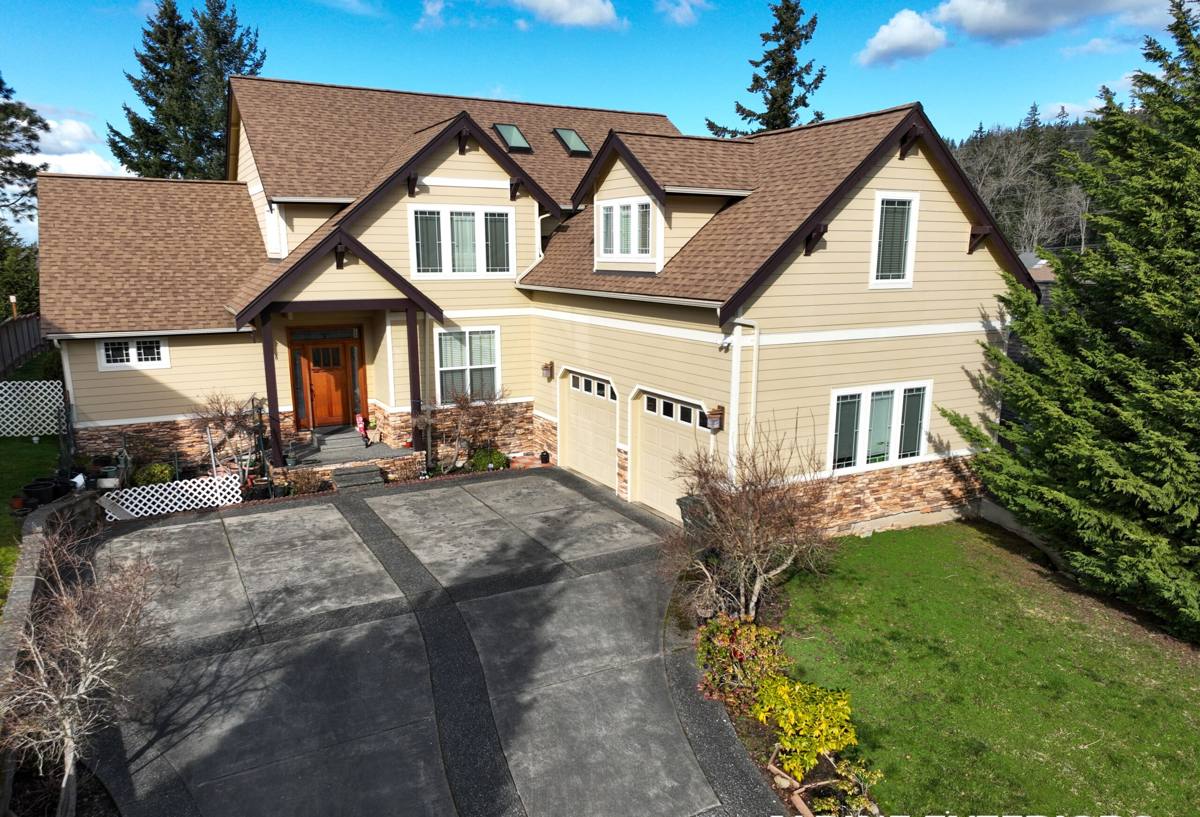
What Storms Actually Do to South Hill Roofs
Storm damage in this neighborhood rarely looks like a single dramatic event. More often it's a combination of things that show up together after a hard blow:
- Lifted or torn shingles along ridge lines and roof edges, where wind uplift is strongest
- Flashing separation around chimneys, skylights, and roof-to-wall junctions, often loosened gradually before a storm finishes the job
- Impact damage from wind-thrown branches or debris, common on lots with mature trees close to the roofline
- Granule loss on asphalt shingles from wind-driven rain, which accelerates aging even when there's no visible hole
- Water intrusion at valleys and low-slope sections where moss and debris were already slowing drainage before the storm hit
The tricky part is that the visible damage — a few missing shingles, a dented vent cap — is often the least of it. Water that gets under a lifted shingle during one storm can sit there through the next several weeks of Pacific Northwest drizzle before it ever shows up as a stain on a ceiling.
Why Moss Season Changes the Storm Damage Picture
Bellingham's long wet stretch means moss has months to establish itself on north-facing slopes and shaded valleys — exactly the areas that get the least sun on a hill-adjacent lot like South Hill. Moss does two things that make storm damage worse:
It holds moisture against the roof deck
A mat of moss acts like a sponge, keeping shingles wet long after the rest of the roof has dried. That constant moisture softens shingle edges and speeds up granule loss, so a roof with moss cover often has less wind resistance than a clean one of the same age — meaning the same storm does more damage to it.
It blocks drainage right when you need it most
During a heavy rain event, moss and the debris it traps can dam up valleys and gutters. Water that should be running off backs up under shingle edges instead, which is a common way storm damage turns into an interior leak days or weeks after the wind has died down.
Any storm repair on a South Hill roof that ignores existing moss and drainage issues is only fixing half the problem.
What a Correct Storm Repair Actually Involves
A proper storm damage repair isn't just replacing what's obviously broken. It's a sequence:
- Full roof inspection, not just the section that looks damaged — wind and water problems often extend past the visible area
- Deck check at any point where shingles were missing or lifted, since sheathing can absorb water even when it isn't rotted yet
- Flashing evaluation at chimneys, skylights, and wall intersections, since these are the most common re-leak points after a storm repair that only replaces shingles
- Matching materials for the repair — mismatched shingle color or profile is a cosmetic issue, but mismatched underlayment or fastening patterns is a durability issue
- Moss and debris clearing in valleys and gutters as part of the same visit, so the repaired section isn't sitting next to a drainage problem
- Documentation of the damage and the repair, which matters for insurance claims and for your own record if you sell the home later
Repair vs. Replacement: How We Make the Call
Not every storm-damaged roof needs full replacement, and not every roof can be safely patched. The honest answer depends on the roof's age, how widespread the damage is, and what condition the rest of the roofing system is in.
| Factor | Favors Repair | Favors Replacement |
|---|---|---|
| Roof age | Under 12-15 years | Nearing or past expected shingle lifespan |
| Damage extent | Isolated to one slope or section | Spread across multiple slopes or the whole roof |
| Granule loss | Minimal outside the damaged area | Widespread, visible in gutters roof-wide |
| Moss/moisture history | Recently maintained, dry deck | Long-term moss cover, soft or stained decking found |
| Prior repairs | First or second repair on this roof | Multiple past patches in different areas |
We'll walk you through where your roof lands on that table before recommending anything. A repair that's the right call for a 6-year-old roof is often the wrong call for one that's 20 years old and just took its third storm hit.
Our Process for South Hill Storm Repairs
We keep the process straightforward because storm damage is stressful enough without an unclear timeline:
1. Assessment
We inspect the roof, photograph the damage, and check the deck and flashing wherever shingles were compromised. We'll tell you plainly whether this is a repair or something bigger.
2. Temporary protection
If there's active water intrusion or a hole that needs covering before the next rain, we get that done first — tarping or temporary sealing so the interior of the house isn't at risk while the repair is scheduled.
3. Written scope and estimate
You get a clear description of what's being repaired, the materials involved, and the cost — no vague line items.
4. The repair itself
Matched materials, proper flashing detail work, and a check of adjacent areas so we're not leaving a known problem next to a fresh fix.
5. Follow-up
We tell you what to watch for and, if moss or drainage issues contributed to the damage, what maintenance would reduce the odds of a repeat.
Why It Matters That We Already Work South Hill
A crew that's worked on South Hill roofs before already understands the local pattern: the wind exposure at this elevation, the shading that speeds up moss growth on certain lots, and the age range of homes common to the neighborhood. That's not a small thing after a storm — it means less time spent figuring out what's normal for this area versus what's a genuine new problem, and a repair plan built around how these roofs actually age here, not a generic checklist.
It also matters for response time. Storm damage doesn't wait for a convenient week, and a contractor already scheduling work in your part of Bellingham can usually get a tarp up or an inspection done faster than one coming from across the county.
What Homeowners Can Check Before Calling
You don't need to get on the roof yourself — we'd rather you didn't, especially right after a storm. But a few ground-level checks help us prioritize:
- Look in gutters and downspouts for shingle granules, shingle pieces, or moss clumps that washed down
- Check the attic (if accessible) for new water stains, damp insulation, or daylight showing through the roof deck
- Note any interior ceiling stains, even faint ones, and when they first appeared relative to the storm
- Look for visibly lifted or missing shingles from the ground or a upstairs window, without climbing anything
- Check gutters and valleys for moss buildup that may have been trapping water before the storm hit
Timing and Whatcom County's Weather Pattern
Storm damage repairs in this region are seasonal in a specific way: fall and winter bring the storms, but the wet stretch that follows can delay repairs and mask new leaks in existing moss or debris. If your roof takes damage in November, waiting until a dry week in July to address it means months of Bellingham rain working on an already-compromised spot. We prioritize storm repair calls for exactly this reason — the gap between damage and repair is where small problems turn into deck rot and interior damage.
If a recent storm left your South Hill roof with missing shingles, a new leak, or damage you're not sure how to size up, we're glad to take a look. The estimate is free, there's no pressure to move forward, and you'll get a straight answer about whether you're looking at a repair or something more — just fill out the form below.