 Bellingham Siding
 Roofing in Sunnyland: A Different Set of Conditions
Sunnyland is one of Bellingham's older, tree-shaded neighborhoods, and that combination — mature canopy plus a marine climate — puts real stress on a roof. Homes here deal with the same wet, mild winters as the rest of Whatcom County, but the tree cover means more standing moisture on the roof deck, more debris in valleys and gutters, and a longer window each year where shaded sections of a roof simply don't dry out between storms. Add in the salt-tinged air that blows in off Bellingham Bay and the Puget Sound side of the county, and you get a slow, steady kind of wear that's easy to miss until a roof is already leaking.
None of this means Sunnyland needs an exotic roofing system. It means asphalt shingle roofing done correctly here looks a little different than asphalt shingle roofing done in a drier inland climate — the materials, the underlayment strategy, and the ventilation all need to account for extended dampness and moss pressure, not just wind and UV.
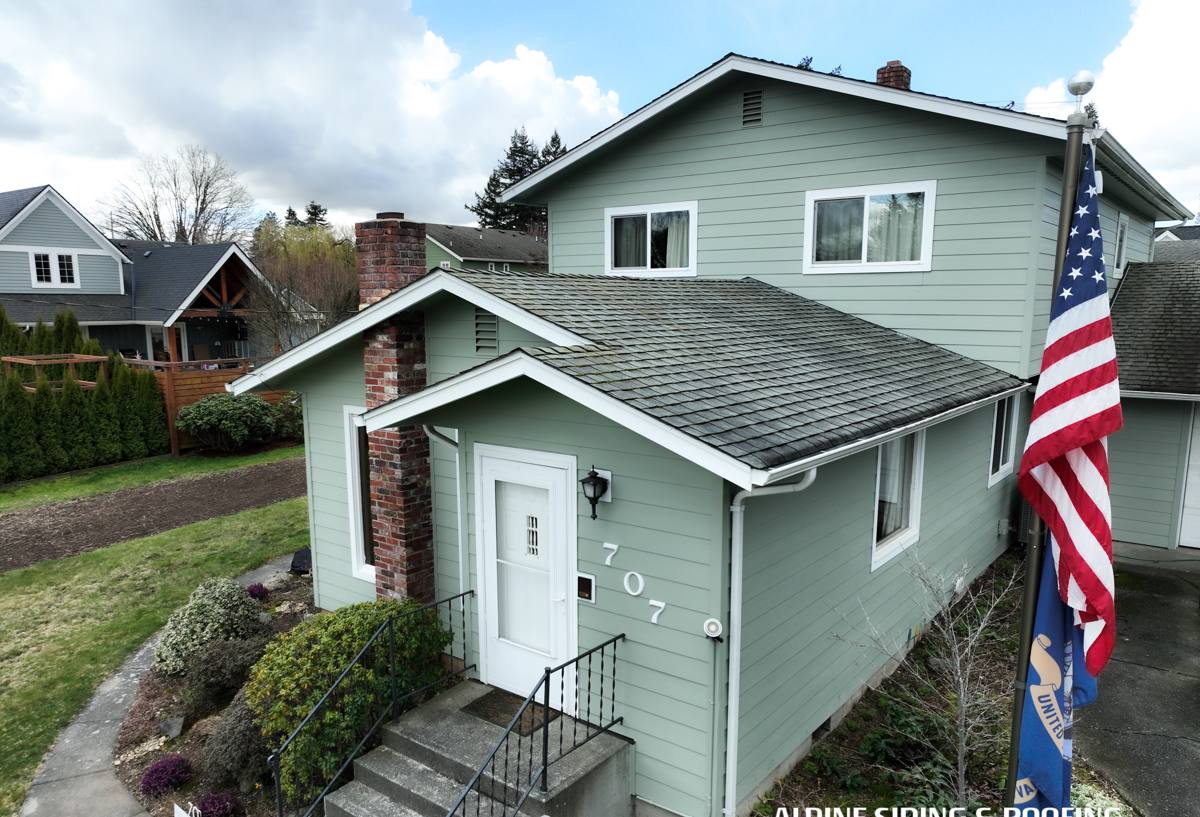
What Bellingham's Climate Actually Does to a Shingle Roof
It's worth being specific about the mechanisms, because they drive every decision below.
- Driving rain: Whatcom County storms frequently come in sideways off the water, pushing water up under shingle tabs and into any gap in flashing or fastener seals rather than just running straight down the slope.
- Salt air: Airborne salt accelerates corrosion on exposed metal — nail heads, flashing, vent stacks, and gutter hardware — long before it does visible damage to the shingles themselves.
- Moss season: Cool, damp shade lets moss and algae colonize roughly eight to nine months out of the year in shaded areas. Moss holds moisture directly against the shingle surface and can lift tabs as it grows.
- Limited direct sun: Tree-shaded sections of a Sunnyland roof dry more slowly after rain than an open, south-facing roof across town, which compounds all three issues above.
Individually, each of these is manageable. Together, over the 20-30 year life of a roof, they're what separates a shingle roof that ages evenly from one that fails early in specific trouble spots — usually north-facing slopes, valleys, and anywhere tree limbs overhang.
What a Correct Asphalt Shingle Installation Involves Here
Underlayment and Moisture Barrier
In a climate this wet, the underlayment matters as much as the shingle brand on top of it. We install self-adhered ice-and-water membrane at eaves, valleys, and around every roof penetration — not just where code requires it — because those are the exact spots where wind-driven rain gets pushed backward under the shingle course. A synthetic underlayment across the rest of the deck gives a second line of defense if any water does make it past the shingles, which happens eventually on every roof, no matter how well it's installed.
Ventilation
A shingle roof that can't breathe traps moisture in the attic, which shortens shingle life from underneath — a failure mode that's invisible from the ground and easy to overlook. Balanced intake at the eaves and exhaust at the ridge keeps air moving so condensation doesn't build up on the underside of the deck during Bellingham's long stretches of cool, damp weather. We check existing ventilation on every reroof rather than assuming what's there is adequate.
Flashing and Fasteners
Given the corrosion risk from salt air, we use flashing and fasteners rated for coastal exposure rather than the cheapest code-minimum hardware. Step flashing at walls and chimneys, and proper valley metal, get installed as separate components rather than relying on shingles alone to shed water at those transitions — those junctions are where the large majority of shingle roof leaks actually start.
Choosing the Right Shingle for a Shaded, Wet Lot
Not every asphalt shingle performs the same way under moss pressure and constant dampness. The table below covers the main practical differences homeowners should weigh, without steering anyone toward a specific brand.
| Shingle Type | Moss/Algae Resistance | Typical Lifespan Here | Best Suited For |
|---|---|---|---|
| Standard 3-tab | Low unless treated | 15-20 years in shaded areas | Budget reroofs, less-shaded slopes |
| Architectural (laminated) | Moderate; better water shedding from thicker profile | 20-25 years | Most Sunnyland homes; good balance of cost and durability |
| Algae-resistant (copper/zinc-granule) shingles | High — granules actively resist moss/algae growth | 25-30 years | North-facing slopes, heavily treed lots, low-maintenance goals |
For a lot like a typical Sunnyland property with real tree cover, we generally steer homeowners toward algae-resistant architectural shingles on the shaded portions of the roof at minimum. It costs a bit more up front but meaningfully reduces how often the roof needs cleaning and how early moss-related repairs show up.
Signs a Sunnyland Roof Needs Attention
Because so much of the damage from moss and driving rain starts underneath the visible shingle surface, it helps to know what to actually look for from the ground or attic before it becomes a bigger repair.
- Green or black streaking, or visible moss clumps, especially on north-facing slopes
- Granules collecting in gutters or at the base of downspouts
- Shingle tabs that look lifted, curled, or cupped rather than lying flat
- Daylight, water stains, or musty smell in the attic near the roof deck
- Rust streaking below flashing, vent stacks, or gutter hardware
- Sagging or soft spots when walking the roofline visually from ground level
- Debris buildup in valleys that doesn't clear on its own after rain
Any one of these on its own isn't necessarily an emergency, but they're worth a professional look — catching a lifted tab or a clogged valley early is a small repair; ignoring it through another wet winter often isn't.
How Our Process Works
- On-site inspection: We walk the roof and attic, checking deck condition, ventilation, flashing, and moss/algae extent — not just shingle age.
- Written estimate: A clear scope of work and price, including any deck repair or ventilation upgrades the inspection turns up, so there are no surprise add-ons mid-project.
- Tear-off and deck assessment: Old roofing comes off down to the deck, which is the only reliable way to check for hidden rot, especially under shaded, historically damp sections.
- Underlayment and flashing installation: Ice-and-water membrane at vulnerable areas, synthetic underlayment across the field, new step and valley flashing.
- Shingle installation: Installed to manufacturer nailing and exposure specs, which is what keeps the warranty valid and the roof performing in high-wind, driving-rain conditions.
- Ventilation check and correction: Intake and exhaust balanced before the job is called complete.
- Cleanup and final walkthrough: Site cleared of debris and fasteners, roof reviewed with the homeowner before we consider the job done.
Living With a Shingle Roof Through Moss Season
Even a well-installed, algae-resistant shingle roof benefits from basic upkeep in a climate like this. Keeping overhanging branches trimmed back reduces both shade and the steady drop of organic debris that feeds moss growth. Gutters and valleys need to be cleared regularly through fall and winter so water has somewhere to go instead of backing up under shingle edges. Where moss has already established itself, it should be removed carefully — scraping or pressure-washing a shingle roof can strip granules and shorten its life, so gentler removal methods and preventive zinc or copper strips at the ridge are generally the better long-term approach. We're happy to walk homeowners through a maintenance routine that fits their specific roof and lot.
What Regular Maintenance Catches Early
- Small flashing gaps before they become active leaks
- Early moss growth before it lifts shingle tabs
- Clogged valleys before water backs up under the roofing
- Ventilation problems before attic moisture damages the deck
What Affects the Cost of a Sunnyland Reroof
Every roof is different, so exact pricing depends on the inspection, but these are the main factors that move the number up or down:
| Factor | Why It Matters |
|---|---|
| Roof size and pitch | More surface area and steeper slopes mean more material, labor time, and safety setup |
| Deck condition | Rotted or soft decking found during tear-off requires replacement before new roofing goes on |
| Shingle grade | Standard 3-tab vs. architectural vs. algae-resistant shingles carry different material costs |
| Layers to remove | Tearing off multiple existing layers takes more labor than a single-layer tear-off |
| Ventilation upgrades | Adding or correcting intake/exhaust vents adds material and labor but protects the new roof's lifespan |
| Access and tree cover | Tight lots or heavy overhanging trees can slow staging and require extra care during tear-off |
As a rough guide, most Sunnyland-area shingle reroofs land somewhere in the broad mid-to-upper five-figure range depending on the factors above, with straightforward repairs costing considerably less. We give homeowners a firm, itemized number after the on-site inspection rather than a ballpark over the phone.
Why a Crew That Already Works in Sunnyland Matters
A roofer who works regularly in this specific pocket of Bellingham already knows which slopes in this kind of terrain hold shade the longest, which framing styles are common on the neighborhood's older housing stock, and what it actually takes to keep a shingle roof performing through a Whatcom County winter rather than just through the first summer after installation. That local pattern recognition shows up in small decisions — where to add extra ice-and-water membrane, whether a given roof needs a ventilation correction, which shingle grade is worth the upgrade — that a crew unfamiliar with the area might miss on a one-time job. Local licensing, insurance, and familiarity with Bellingham's permitting process also make the project run smoother from start to finish.
Get a Free Estimate
If your Sunnyland home's shingle roof is showing moss, missing granules, or you're just not sure how much life it has left, we're glad to take a look. The estimate is free, there's no pressure, and you'll get a straight answer about what your roof actually needs — use the form below to get started.