 Bellingham Siding
 Why Ferndale's Climate Is Hard on Windows
Ferndale sits close enough to the water that salt-laden air is a real factor in how fast window components age, not just a coastal talking point. Combine that with the driving rain that comes off the Strait most of the fall and winter, plus a moss season that can stretch for months in the shaded, damp corners of a lot, and you have three separate forces working against a window at the same time: corrosion, water intrusion, and organic growth that holds moisture against the frame. None of these are dramatic on their own. They're slow. That's what makes them dangerous — by the time a homeowner notices a soft spot on a sill or a window that won't latch cleanly, the damage has usually been building for a few seasons already.
Whatcom County homes, especially ones with any age on them, were often built to a window standard that assumed less wind-driven moisture than what actually shows up here most winters. Older aluminum-frame windows in particular don't hold up well to this combination — they conduct cold, sweat on the inside, and their gaskets harden and crack faster in salt air than they would further inland. That's the starting point for almost every Ferndale window job we look at.
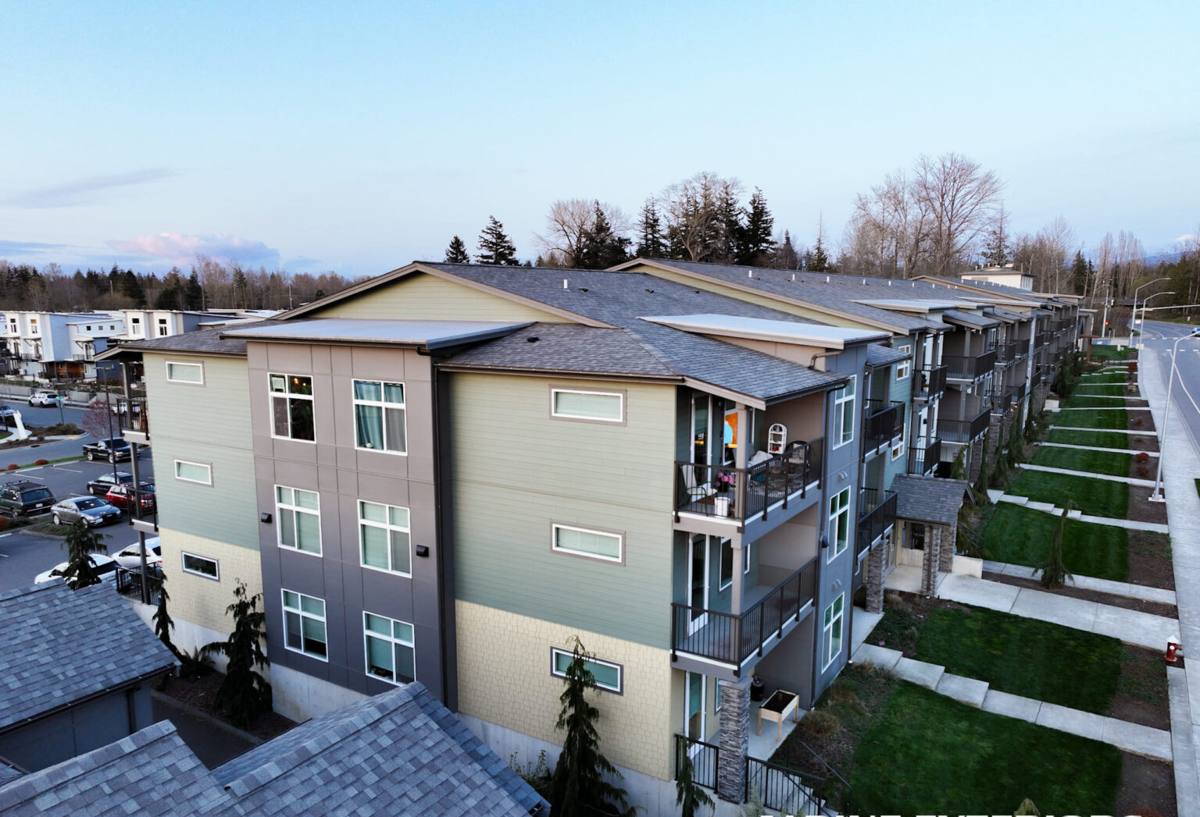
Signs a Ferndale Home Needs Window Replacement
Most homeowners call us because of one obvious problem — a stuck window, a draft, visible fog between panes — but a proper inspection usually turns up more going on. Here's what we check for and what it usually means:
- Fogging or haze between the panes — the seal on a double-pane unit has failed and the gas fill (or just dry air) has been replaced by moisture. This isn't repairable; the sash or the whole unit needs replacing.
- Soft or discolored wood at the sill or corners — a sign that water has been getting behind the frame, often for longer than it looks from outside.
- Moss or dark streaking on the frame or trim — moss holds moisture against wood and painted surfaces far longer than bare material would dry on its own, which accelerates rot underneath.
- Windows that are hard to open, close, or lock — frames swell and warp with repeated wetting and drying cycles, or the house has settled and the opening is no longer square.
- Cold drafts near the frame even when the window is latched — usually failed weatherstripping or a frame that's no longer sealing evenly against the sash.
- Visible corrosion on hardware, hinges, or aluminum frames — salt air speeds this up noticeably compared to inland properties.
- A noticeable jump in heating costs with no other explanation — old, leaky windows are one of the most common culprits.
What a Correct Window Replacement Job Actually Involves
It's Not Just Swapping the Glass
A window replacement done right is mostly about what happens around the window, not the window itself. The unit is only as good as the opening it sits in and the way water is managed around it. On a coastal, high-rainfall property like most of what we see in Ferndale, that means:
- Removing the old unit and inspecting the framing, sill, and sheathing underneath for hidden rot before anything new goes in.
- Repairing or replacing any compromised framing — installing a new window over damaged structure just locks the problem inside the wall.
- Installing correctly lapped flashing and a sill pan that directs any water that does get past the window back outside, rather than into the wall cavity.
- Using sealant and housewrap integration that follows the "shingle" principle — every layer overlaps the one below it so water is always directed down and out, never trapped.
- Shimming and leveling the new unit precisely so it operates smoothly and seals evenly on all four sides, then insulating the gap between frame and rough opening (not just caulking over it).
- Finishing trim and exterior sealant in a way that sheds water and doesn't create a shelf where moss and debris can collect.
Skip any of these steps and the new window will look fine for a year or two before the same moisture problems start showing up again — just hidden behind a new frame instead of an old one.
Choosing Window Materials for Whatcom County Weather
There's no single "best" window material — there's a best fit for the exposure, the budget, and how much maintenance a homeowner actually wants to do. Here's how the common options hold up in a salt-air, high-rainfall climate like Ferndale's:
| Material | How It Handles Salt Air & Moisture | Maintenance | Typical Trade-Off |
|---|---|---|---|
| Vinyl | Doesn't corrode or rot; performs consistently in coastal air | Low — occasional cleaning | Frame color/style options are more limited than wood or fiberglass |
| Fiberglass | Excellent — dimensionally stable, resists moisture and salt corrosion well | Low | Higher upfront cost than vinyl |
| Wood (clad exterior) | Good if the exterior cladding is intact; exposed wood is vulnerable to the wet/dry cycling common here | Higher — cladding seams and any exposed wood need periodic attention | Best appearance for period or craftsman homes, but least forgiving of deferred maintenance |
| Aluminum | Poor in this climate — conducts cold, prone to condensation and corrosion in salt air | Moderate to high | We don't recommend it for Ferndale's exposure; it's a poor match for the conditions, not a bad product everywhere |
For most Ferndale homes we end up recommending vinyl or fiberglass for the bulk of the openings, with wood-clad reserved for street-facing windows on homes where the architectural style calls for it and the owner is comfortable with the added upkeep.
Glass Packages Worth Considering
Double-pane, low-E glass is the baseline we'd install on any Ferndale home today — it's a meaningful step up in comfort and energy performance over older single or basic double-pane glass without a large cost jump. Argon-filled units add a bit more insulating value for a modest premium. Triple-pane is available but usually only makes sense on north-facing or particularly exposed walls where the extra cost is worth the marginal gain — we'll tell you honestly when it isn't.
Our Window Replacement Process
- On-site assessment. We look at every window being discussed, not just the ones you've flagged, and check the framing and siding condition around each one.
- Honest scope and quote. You get a written breakdown of what's being replaced, what materials are recommended and why, and what it costs — no pressure to upgrade beyond what the house actually needs.
- Careful removal. Old units come out without unnecessary damage to surrounding siding or trim, and we flag any hidden rot before moving forward.
- Structural repair if needed. Any soft framing or sheathing gets addressed before a new window goes in — this is not an optional add-on we skip to save time.
- Proper flashing and sealing. Sill pans, flashing tape, and housewrap integration are installed to shed water, matched to this area's rainfall and wind-driven exposure.
- Precise installation. Units are shimmed, leveled, and insulated so they operate smoothly and seal evenly for the long run.
- Finish work and walkthrough. Trim and caulking are finished clean, and we walk the job with you before calling it done.
Mistakes We See Undoing Other People's Window Work
Most of the callbacks we get for "new" windows that are already failing trace back to a short list of shortcuts:
- Caulk used in place of proper flashing — it fails silently and lets water track down inside the wall.
- New windows installed over rotted framing that was never inspected or repaired.
- Trim reinstalled tight against the siding with no drainage gap, trapping moisture and giving moss somewhere to take hold.
- Units installed out of square, which strains the seals and shortens the life of the weatherstripping.
- Mismatched glass packages for the exposure — putting a basic glass unit on a wall that takes the worst of the wind and rain.
Every one of these looks fine from the curb on install day. The problems show up eighteen months to a few years later, which is exactly why it's worth asking a contractor how they handle flashing and framing repair before you ask about brands.
What Window Replacement Costs in Ferndale
Pricing depends on the number of openings, the material chosen, whether any framing repair is needed, and the size and style of the windows. As a general guide:
| Cost Factor | Why It Matters |
|---|---|
| Number of windows | Per-window cost drops somewhat on larger jobs, but each opening still needs its own flashing and finish work |
| Frame material | Vinyl is typically the most budget-friendly; fiberglass and wood-clad cost more upfront |
| Hidden framing repair | Rot found during removal adds labor and material, but skipping it costs far more later |
| Window size and style | Large picture windows, bay windows, and custom shapes cost more than standard single or double-hung units |
| Glass package | Low-E and argon-filled glass add a modest premium over basic double-pane |
| Access and exterior finish | Second-story windows or homes with brick/stucco exteriors can add labor time |
We'd rather give you a real number after seeing the openings in person than a broad estimate that doesn't hold up once we're on site. There's no cost to have us take a look.
Why It Matters That We Already Work in Ferndale
A crew that regularly works Whatcom County properties already knows what this climate does to a window opening over time — where moss tends to build, how wind-driven rain hits certain wall orientations harder than others, and what materials genuinely hold up versus what just looks good on a spec sheet. That's not something you can fully substitute with general contracting experience from a drier region. It shows up in small decisions on every job: how tight to run a drainage gap, which glass package actually earns its price on an exposed wall, whether a sill needs a repair or just a new unit.
It also means we're not guessing at permitting, disposal, or the pace of scheduling around this area's weather windows. We'd rather do fewer jobs well than take on more than we can do carefully — that's the standard we hold every window replacement to, in Ferndale or anywhere else we work.
If you're dealing with drafty, foggy, or hard-to-operate windows — or you just want an honest read on what your home actually needs — we're happy to take a look and put together a free, no-pressure estimate. Fill out the form below and we'll get back to you.