 Bellingham Siding
 Metal Roofing in York: What This Neighborhood's Homes Are Up Against
York sits close enough to the water and the weather patterns that move through Whatcom County that roofs here take a different kind of beating than roofs twenty miles inland. It's not one big storm that does the damage — it's the steady grind of salt-laden air off the bay, months of driving rain that never really stops, and a moss season that seems to start earlier every year. A roof in York needs to handle all three at once, every year, for decades. Metal roofing, installed correctly, is one of the few systems that genuinely holds up to that combination.
We're not going to tell you metal is the right choice for every home or every budget — it isn't, and we'll say so plainly during an estimate if your situation calls for something else. But for homeowners in York looking at a roof replacement and weighing their options against what this climate actually does to a house, metal deserves a serious look, and this page is about what that job actually involves here.
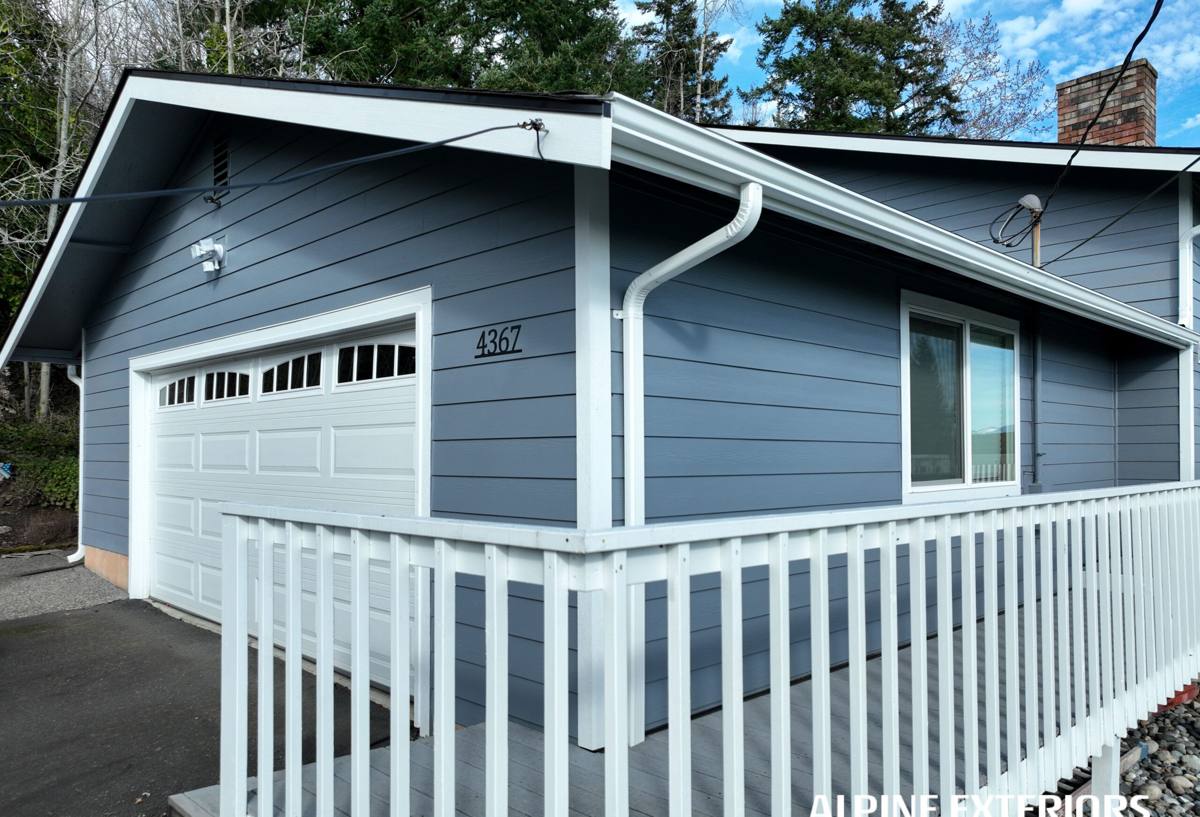
Why Salt Air, Rain, and Moss Change the Calculus
Salt Air and Metal Roofing
Proximity to Bellingham Bay means airborne salt settles on every exterior surface, roofs included. That's a real consideration for metal roofing because not all metals and coatings handle salt exposure the same way. Bare or poorly coated steel can corrode faster near the water. This is why we're selective about panel material and finish for jobs in York — we're not installing the same spec here that we'd use for a home twenty minutes east with no coastal exposure.
Driving Rain and Water Management
Whatcom County doesn't get dramatic downpours as often as it gets weeks of steady, wind-driven rain. That kind of rain finds every weak seam, every under-lapped panel edge, and every place where flashing was rushed. Metal roofing sheds water well by design, but only if the underlayment, seams, and flashing details are done right. A metal roof with sloppy flashing work will leak in this climate just as fast as any other roof — the material isn't a substitute for correct installation.
Moss and Organic Growth
Moss needs shade, moisture, and time to establish, and York's tree cover combined with our damp stretches gives it all three. Moss on an asphalt roof works its way under shingle tabs and lifts them over time. Metal doesn't give moss the same foothold — there's no granule surface for spores to grab onto, and the smooth, sloped panels shed water fast enough that moss struggles to establish on a well-installed system. It's one of the clearest long-term maintenance advantages metal has in this specific area.
What Metal Roofing Actually Involves
"Metal roofing" covers more than one product, and the differences matter for a York home. Here's a straightforward breakdown of what we typically discuss with homeowners in this area.
| Option | Typical Use Case | Coastal/Moss Performance | General Cost Position |
|---|---|---|---|
| Standing seam steel | Full roof replacements, homes wanting a clean modern look | Strong — concealed fasteners, smooth panel sheds water and debris well | Mid-to-upper range |
| Exposed-fastener metal panels | Budget-conscious replacements, outbuildings, some full roofs | Good, but fasteners need periodic inspection and re-sealing over time | Lower-to-mid range |
| Stone-coated steel | Homeowners wanting a shingle or tile look with metal's durability | Good, adds texture that can hold light debris — periodic cleaning matters more | Mid-to-upper range |
| Aluminum panel systems | Direct coastal exposure, corrosion-sensitive sites | Excellent — naturally corrosion-resistant, well-suited to salt air | Upper range |
For most York homes, we lean toward standing seam steel with a coastal-rated finish, or aluminum when a home sits closer to open water or gets consistent salt spray. We'll walk through the actual trade-offs for your specific property rather than pushing one system by default.
The Parts That Actually Determine Whether It Leaks
The panels themselves get most of the attention, but the details around them are what determine whether a metal roof performs for 40+ years or starts causing problems in five. On every job we treat these as non-negotiable:
- Ice-and-water or high-quality synthetic underlayment at eaves, valleys, and penetrations — not just field-run felt
- Properly lapped and sealed panel seams, installed in the correct sequence relative to prevailing wind and rain direction
- Formed metal flashing at every valley, wall intersection, and chimney — not caulk substituting for flashing
- Corrosion-compatible fasteners and trim matched to the panel material, to avoid galvanic reaction between dissimilar metals
- Proper ventilation at the ridge and soffit so moisture doesn't get trapped under the deck
- Ice/snow retention consideration where the roof overhangs walkways or driveways, since smooth metal sheds accumulated snow differently than shingles
How We Approach a York Roofing Job
Assessment First
We start with a real look at the roof deck, existing ventilation, and any signs of past moisture intrusion — not just a surface glance at the shingles or panels on top. In a climate this wet, what's happening under the roof surface matters as much as what's visible from the ground. If there's deck damage from years of moss holding moisture against the roof, that gets addressed before a single new panel goes on.
Material Selection Based on Exposure
Where your specific property sits relative to open water, tree cover, and prevailing wind affects which panel material and coating we recommend. A home tucked back under mature trees has a different moss risk profile than one on a more exposed lot, and we factor that into both material choice and detailing.
Tear-Off and Deck Prep
We remove the old roofing down to the deck, inspect for rot or soft spots (common where moss has been holding moisture for years), and replace any compromised sheathing before underlayment goes down. Skipping this step is one of the most common ways a metal roof fails early — it isn't the metal, it's what's underneath it.
Underlayment and Flashing
This is where a lot of the actual weatherproofing happens, and it's the stage most likely to get shortchanged by crews trying to move fast. We install underlayment rated for this climate and take the time on flashing details — valleys, chimneys, skylights, wall intersections — because these are the points where driving rain finds its way in.
Panel Installation
Panels go on with attention to seam direction, fastener spacing, and thermal movement allowance (metal expands and contracts with temperature swings more than asphalt does, and panels need to be installed to accommodate that without buckling or loosening over time).
Final Walkthrough
We walk the finished roof with you, cover basic maintenance expectations, and make sure you understand what warranty coverage applies to materials versus workmanship.
Maintenance: What a Metal Roof Actually Needs in York
Metal roofing is lower-maintenance than most alternatives in this climate, but "low-maintenance" isn't "no-maintenance." A simple annual routine goes a long way:
- Clear debris (needles, leaves, small branches) from valleys and around penetrations, especially after fall storms
- Check gutters and downspouts are flowing freely — clogged gutters back water up under eave flashing
- Look for any early moss or algae staining and address it before it establishes, rather than after
- Have flashing and sealant points inspected every few years, particularly around chimneys and skylights
- After any major windstorm, a quick visual check for lifted trim or debris impact is worth the five minutes
None of this requires a specialist visit every year — most of it is a homeowner doing a quick check twice a year. That's part of the appeal for people who are tired of dealing with moss removal and shingle repair on a recurring basis.
Cost Factors Worth Understanding Upfront
Metal roofing generally carries a higher upfront cost than asphalt shingles, and we won't pretend otherwise. What changes the math for a lot of York homeowners is the long-term side of the equation: fewer moss-related repairs, less frequent full replacement, and better performance against the wind-driven rain this area gets every winter. Whether that trade-off makes sense depends on how long you plan to stay in the home, your roof's complexity, and your budget. A few things that move the price on any given job:
- Roof complexity — number of valleys, penetrations, and roof planes
- Panel material chosen (steel vs. aluminum vs. stone-coated)
- Condition of the existing deck and whether repair or replacement is needed
- Tear-off scope — how many existing layers are coming off
- Access — steep pitches or difficult site access add labor time
We give straightforward numbers during the estimate once we've actually seen the roof — not a ballpark pulled from a national average that doesn't account for York's conditions or your specific home.
Why Local Experience on This Specific Job Matters
A crew that's worked roofs across Whatcom County knows the difference between a roof that just needs new panels and one where moss has been quietly compromising the deck for years. They know which flashing details actually hold up against the kind of sideways rain York gets in November and December, and which material choices make sense given how close a given property sits to salt air exposure. That's not something you get from a national roofing outfit running a generic install spec regardless of where the house sits — it comes from doing this work, on these roofs, in this weather, repeatedly.
If you're weighing a metal roof for your York home, we're happy to walk your roof, talk through honest options for your situation, and give you a straightforward, no-pressure estimate — fill out the form below to get started.